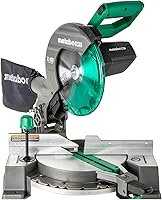
Can Miter Saw Blades Be Sharpened?
Yes, miter saw blades can be sharpened. Carbide-tipped teeth can be ground back to a clean edge by a sharpening service, though the blade loses a little kerf each time and some blades cost less to replace than to sharpen.
On this page (8 sections)
- Can miter saw blades be sharpened without ruining them?
- How does a sharpening service actually sharpen a miter saw blade?
- Which blades are worth sharpening and which are not?
- How much does sharpening a miter saw blade cost?
- How can you tell when a miter saw blade needs sharpening?
- Can you sharpen a miter saw blade at home?
- Does a sharpened blade cut as well as a new one?
- What should you do with a dull miter saw blade?
Yes, miter saw blades can be sharpened. Carbide-tipped teeth can be ground back to a clean edge by a sharpening service, and many 10-inch blades come back cutting close to new.
The real question is whether your blade is worth the trip, because each sharpening removes a little carbide and some blades cost less to replace than to restore.
Sharpen a quality carbide blade once or twice, then replace it. Skip the service for a cheap blade with soft teeth.
That is the decision this guide walks through, from the tooth geometry that makes a blade sharpenable to the signals that tell you it's time.
Can miter saw blades be sharpened without ruining them?
Yes, as long as the teeth are carbide and there is enough carbide left to grind. A sharpening shop grinds each tooth to a fresh face at the original bevel angle, then checks that all teeth sit at the same height.
Carbide is hard and holds an edge, but it is also brittle. A blade that hit a nail or a screw may have chipped teeth, and those chips have to be ground out, which shortens the tooth.
A tooth worn down to the steel body cannot be saved.
The process works best on blades built for it. A thick plate and generous carbide tips give the shop material to work with.
If you are still choosing a blade to sharpen later, read our guide to the best miter saw blade options to see which ones have the tooth geometry a shop can restore.
How does a sharpening service actually sharpen a miter saw blade?
The shop grinds the face of every tooth on a precision machine, one tooth at a time, at the blade's original angles. It does not file the teeth by hand or bend them back into shape.
First the blade is cleaned and checked for cracks, bent plates and missing teeth. Then the machine indexes around the rim and grinds each tooth to the same bevel.
After grinding, the teeth are checked for equal height, because one high tooth does most of the cutting and wears fast.
Many shops also check the set of the teeth and rebalance the blade. A blade out of balance vibrates, and vibration is what dulls teeth and leaves a rough cut.
Expect the blade to come back with a slightly narrower kerf. A thin kerf blade at 0.090 in loses a few thousandths each time, and that is why a blade only takes so many sharpenings.
Which blades are worth sharpening and which are not?
A quality carbide blade is worth sharpening; a cheap blade usually is not. The deciding factor is the price of the blade against the cost of the service, plus how much carbide the teeth carry.
A 60-tooth blade with premium carbide is a good candidate. The Freud LU91M010 is a 10-inch, 60-tooth blade with TiCo high-density carbide tips and negative hook angles.
That tooth count and tip quality are the kind of build a shop can restore.
The Diablo D1080X is another blade worth sending out. It has 80 teeth and a PermaShield coating, and the high tooth count means more grinding time, so the service costs more than for a 40-tooth blade.
A budget blade with soft carbide is the usual skip. Grinding it costs close to a new blade, and the edge won't last as long as the original.
When does sharpening stop making sense?
Sharpening stops making sense when the blade has lost too much carbide to grind a clean edge, or when the service costs more than a new blade.
Cracked plates, bent bodies and missing teeth end the conversation. A blade that wobbles after a sharpening should be retired, because an out-of-true blade is a safety problem on any saw.
A blade used on abrasive material is also a poor candidate. Cutting composite decking, fiber cement or flooring wears carbide fast, so the blade spends more time at the shop than on the saw.
For those jobs, buy a dedicated blade and treat it as a consumable.
How much does sharpening a miter saw blade cost?
Most services charge a flat fee per blade plus a few cents per tooth, so a 40-tooth blade runs less than an 80-tooth one. The total usually lands well under the price of a quality new blade, but above the price of a budget one.
Shipping adds to the bill if you mail the blade. Many towns have a local saw shop or a sharpening service at a hardware store, which saves postage and turnaround time.
Ask about the price before you hand over the blade.
The break-even test is simple. If the service costs less than half the price of the same blade new, sharpening is usually worth it.
If it costs most of the price of a new blade, buy new and keep the old one as a backup.
How can you tell when a miter saw blade needs sharpening?
Look for burn marks, a saw that strains, and tear-out at the cut edge. These are the signs the teeth are dull and the blade is rubbing instead of slicing.
A dull blade leaves scorch marks on the wood, especially in dense species. It also makes the saw motor work harder, which you hear as a drop in pitch.
Fine trim cuts start to splinter instead of leaving a clean edge.
The blade may also wander. If your cuts drift off the line even though the fence is square, a dull blade can be the cause.
Before you blame the teeth, clean the blade. Pitch and resin build-up on the teeth make a sharp blade act dull.
A blade that cuts well after cleaning was not dull at all.
Can you sharpen a miter saw blade at home?
You can touch up a carbide edge at home with a diamond file or a small diamond wheel, but keeping every tooth identical by hand is hard. One tooth ground lower than its neighbors makes the blade cut unevenly and wear faster.
A diamond file drawn along each tooth face at the original angle can restore a slightly dull edge. This works best as light maintenance between professional sharpenings.
It does not remove chips or restore a badly worn blade.
Power tools make the job worse, not better. A bench grinder heats the carbide and can crack the tips, and it is almost impossible to hold the same angle around 60 or 80 teeth.
If you only cut softwood and trim, a diamond file touch-up can stretch the time between services. For a blade that has cut hundreds of feet of hardwood, send it out.
Does a sharpened blade cut as well as a new one?
A properly sharpened quality blade cuts close to new, but not exactly the same. The teeth are slightly smaller and the kerf is a little narrower, so the blade feels a touch different in the cut.
The cut quality can actually improve for a short while. A fresh grind gives clean, sharp tips that slice cleanly through trim.
The blade will feel smooth and quiet if the shop rebalanced it.
The difference shows up over time. A blade that has been sharpened twice has less carbide, so it dulls faster than a new blade.
If you cut a lot of hardwood, a new blade lasts longer per dollar.
The comparison is not really sharpened versus new. It is sharpened versus throwing away a blade that still has life.
A quality blade that gets a good grind is a better buy than a budget replacement.
What should you do with a dull miter saw blade?
Decide between sharpening and replacing based on the blade's quality and the service cost. A quality carbide blade with good teeth goes to the shop.
A budget blade or a damaged one goes in the recycling bin.
If you keep a spare blade on hand, you never lose cutting time waiting for a sharpening. Our guide to how long do miter saw blades last covers how much cutting to expect from a blade before it needs attention.
The Freud LU91M010 is a strong candidate to keep as your everyday crosscut blade. Its 60 teeth and negative hook angles suit sliding compound saws, and the carbide tips give a shop something to work with.
For finer trim work, the Diablo D1080X adds teeth and a coating that resists pitch. The higher tooth count means a higher sharpening cost, so factor that into the decision.
If your saw struggles in thick stock, the Freud LU88R010 uses a positive hook angle and thin kerf to feed easier.
If you are still working out which blade belongs on your saw, our guide to what a miter saw is used for covers the cuts each blade type handles best. And if you are deciding between saw types, miter saw vs compound miter saw explains which one takes which blade.
To sum up: can miter saw blades be sharpened? Yes, and a good carbide blade deserves a second life.
Send a quality blade out once or twice, keep a spare on the shelf, and replace the cheap ones without regret. That rule keeps your cuts clean and your saw running without wasting money on blades that were never worth restoring.
Frequently asked questions
How many times can a blade be sharpened?
Usually two or three times, depending on how much carbide is left on the teeth. Each sharpening removes a little material from the tip and the plate, so the blade gets thinner and the kerf narrows with every pass.
Does a sharpened blade cut as well as a new one?
A good service can bring a quality blade back close to its original cut, though it won't be identical because the teeth are slightly smaller and the kerf is narrower. A cheap blade with soft carbide rarely returns to its first-day performance.
How do you know when a blade needs sharpening?
Look for burn marks on the cut, a saw that strains or slows in the wood, and more tear-out than usual. A blade that still feels sharp but wanders off the line may need cleaning rather than sharpening.