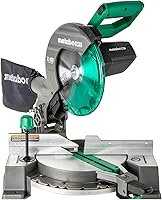
Miter Saw vs Compound Miter Saw: What Differs? (October 2026)
A compound miter saw adds blade tilt for bevel cuts; a basic miter saw handles crosscuts and miter cuts. Choose compound when your projects need bevels, and basic when they don't.
On this page (8 sections)
- Miter saw vs compound miter saw: what is the main difference?
- Which cuts can each saw make?
- Does sliding change the difference?
- How do you choose between single and double bevel?
- What should you check before buying?
- How do you set up and use either saw?
- Is a compound miter saw worth it?
- Miter saw vs compound miter saw: which should you choose?
For miter saw vs compound miter saw, choose compound when your cuts need blade tilt for bevels; choose a basic miter saw for straight crosscuts and angled ends. That distinction matters for trim, frames and other projects where the board’s face needs an angle as well as its end.
A compound saw adds a bevel adjustment. The extra feature is useful when a cut plan calls for one.
It adds a setting to choose and check. If you never need bevels, the simpler saw type can be a better fit.

 Best for two-way molding
DeWalt DWS716 12-Inch Double-Bevel Compound Miter Saw
Miter saw vs compound miter saw: what is the main difference?
A compound miter saw tilts its blade for bevel cuts; a basic miter saw pivots the blade for miter cuts but does not tilt. Both make crosscuts, so the deciding question is whether your projects also need an angled cut through the board’s thickness.
A miter cut angles a board’s end across its face, as when two trim pieces meet at a corner. A bevel cut changes the cut angle through the board’s thickness, creating a slanted edge on its face.
A compound cut combines a miter and a bevel in one cut. See our guide to miter cuts vs bevel cuts for examples of how those angles differ.
The word “compound” describes the added bevel action. The saw still makes the square crosscuts and angled ends you might use a basic miter saw for.
What does a compound miter saw do differently?
A compound saw tilts the blade while the saw head still pivots left or right. You can set a bevel by itself or pair it with a miter setting for a compound angle.
A single-bevel saw tilts one way. A double-bevel saw tilts in both directions, which can save you from turning a workpiece to make a matching bevel on its other end.
Check the direction and range before buying. The Metabo HPT C10FCG2 tilts left from 0–45°, while the DeWalt DWS716 tilts left and right from 0–48°.
Which cuts can each saw make?
A basic miter saw makes crosscuts and miter cuts, while a compound model adds bevel and compound cuts. The right type depends on the cut list for your project, not on which tool sounds more capable.
A straight crosscut goes square across a board. A miter changes the angle across the face; a bevel changes the angle through the board’s thickness.
You can make a useful buying decision by looking at a project plan and marking each cut as square, miter, bevel or compound. If every cut is square or mitered, you have no need for bevel adjustment.
If even one repeated step calls for a bevel, compare compound models and their tilt directions.
When is a basic miter saw enough?
A basic saw is enough when your projects use square crosscuts and angled ends without bevels. It can suit simple trim, framing tasks and woodworking plans that call for those cuts only.
Before choosing one, check that the saw can handle the width and thickness of your material. A cut angle matters too: the saw must support the miter range your plan calls for.
A basic saw is worth skipping if you know you’ll need angled faces or combined angles. You could make some bevel work with other tools, but that means extra setup and another step for cuts the compound saw can make at its head.
The miter saw uses guide covers common tasks for this saw type. For an overview of sizes and variations, see compound miter saws.
When do you need a compound miter saw?
Choose a compound model when your project needs bevel cuts or compound angles. That can apply to trim around corners, frames and other work where a slanted face must meet another piece cleanly.
Pick single bevel if the bevel direction in your cut plan runs one way. You may need to turn or reposition pieces to make opposing cuts, so consider how often you repeat them.
The Metabo HPT C10FCG2 is a practical match for one-way bevel work. It has a 10-inch blade and supports miter angles up to 52° left or right.
For matching bevels in both directions, consider the DeWalt DWS716. Its double-bevel action can reduce the need to turn a workpiece, and its tall sliding fences support crown molding up to 6-5/8 in nested or base molding up to 6-1/2 in vertically.
A compound saw may be unnecessary if bevels are rare and your regular work involves only simple crosscuts. The extra adjustment won’t improve those cuts by itself, so base the choice on actual project requirements.
Does sliding change the difference?
Sliding adds forward and back blade travel, which can increase crosscut capacity; it does not replace bevel adjustment. A sliding saw may be compound or non-compound, so check those features separately.
Sliding travel can help when a board is too wide for a saw’s fixed cut. It also affects setup: the saw needs room for its rails or slide mechanism, and your bench must support both the tool and the material.
Start by checking the width of your boards against the model’s stated capacity. If the saw sits near a wall, account for its rail layout before you choose a location.
Our guide to sliding vs compound miter saws explains how the two features work together.
Is a sliding saw right for a tight bench?
A sliding saw can suit a tight bench if its rail design leaves enough clearance for the saw and the workpiece. Some rails extend behind the saw, while compact rail designs can reduce the space needed between the bench and a wall.
The Skil SRS0001 combines a fixed compact rail system with single-bevel adjustment to the left. Its 7-1/4-inch blade and stated cut capacities should match your materials before you choose it.
This model’s stand is sold separately. Plan for a stable bench or stand and enough room to support long boards at the same height as the saw table.
How do you choose between single and double bevel?
Choose single bevel when one tilt direction covers your work; choose double bevel when you often make matching bevels both ways. The difference shows up in repeated setup and how often you need to turn the workpiece.
A single-bevel saw can be a sound choice for occasional bevel cuts. When the next piece needs a bevel in the opposite direction, you may need to reposition the material, depending on the cut and setup.
A double-bevel saw can make that step easier, but it does not remove the need to secure each piece and confirm the angle. Consider how many matching cuts you make and whether your stock is easy to turn safely.
For more detail, read what a dual-bevel miter saw does. Check the tilt range and stops for the directions and angles your project uses.
What should you check before buying?
Match the cut types, capacity and workspace needs to the jobs you expect to do. Blade size alone does not tell you which angles a saw can make or whether your material will fit.
Start with two or three likely projects. Write down the board width and thickness, along with the angles each one needs and how many cuts you’ll repeat.
This gives you a practical checklist rather than a guess based on a tool’s name.
Then compare:
- Bevel direction and range: One tilt direction may be enough; two can help with repeated opposing bevels.
- Miter range and stops: Confirm that the angles you need are supported and easy to set.
- Cutting capacity: Compare the widest and thickest pieces with the saw’s stated capacity.
- Workspace: Leave room for rails, longer boards and material supports.
- Clamping and support: The workpiece should rest steadily against the fence and table before cutting.
- Portability: If you move the saw often, consider its weight and how you will carry it.
The Metabo HPT C10FCG2 weighs about 24 lb, which can suit someone who moves a saw between a workshop and a job site. The DeWalt DWS716 weighs 48.3 lb, so its double-bevel feature and molding support may matter more than easy carrying.
If your bench space is limited, the Skil SRS0001 has a fixed compact rail system designed to reduce its benchtop-to-wall footprint. Its 7-1/4-inch blade and stated capacity still need to fit the material you plan to cut.
For blade choices, see our guide to miter saw blades. A suitable blade and a well-supported workpiece both matter for clean, controlled cuts.
How do you set up and use either saw?
Set up the saw on a stable surface, support the workpiece, and confirm the cut settings before starting. Safe, repeatable work begins with the material held firmly and the blade path clear.
Place the saw where you can move the workpiece without hitting a wall or nearby tools. Support long stock so it stays level with the table, and keep the fence area free of offcuts and dust that could hold a board out of position.
Clamp the workpiece when the saw and cut allow it. Align the intended cut line, then set the miter and bevel angles.
Check that the board sits flat against the table and fence, and make sure your hands remain clear of the blade path. Follow the saw’s manual for guards and operating steps.
For a compound cut, set both angles and confirm each one before cutting the first piece. Make a sample cut on scrap when fit matters, then check the joint before repeating the setting across finished parts.
What mistakes cause poor fit or awkward cuts?
The most common avoidable mistakes are choosing the wrong cut type, setting an angle in the wrong direction and failing to support the workpiece. A quick check before cutting can prevent a stack of miscut pieces.
Do not confuse a bevel with a miter. If the board’s face needs to slope, a miter setting alone will not create that angle.
Do not assume every compound saw tilts both ways. Check whether it is single or double bevel, then confirm the direction and range needed for the cut.
Avoid cutting material that exceeds the saw’s stated capacity. Also avoid letting a long board sag or shift while you cut, since movement can affect both the angle and the finish.
Finally, don’t rely on a laser or shadow line to replace a secure setup. Use the guide to line up the cut, but keep the material against the fence and confirm the setting before repeating cuts.
Is a compound miter saw worth it?
A compound saw is worth considering when your projects call for bevel or compound cuts. If you only need square crosscuts and miters, a basic miter saw may cover the work you do.
Choose single bevel for projects that need tilt in one direction and double bevel when matching angles on both sides are common. If wider stock is the main challenge, check sliding capacity and available space as separate buying questions.
Miter saw vs compound miter saw: which should you choose?
Pick a basic miter saw for crosscuts and miter cuts; pick a compound model when your work needs blade tilt. Choose single bevel if one tilt direction covers your projects, double bevel if you repeat bevels in both directions, and sliding if you need more crosscut capacity.
Before you buy, list the cuts and board sizes for your next few projects. Match that list to the saw’s angle range, capacity and space needs, then use our compound miter saw guide to compare the main types.
Frequently asked questions
Is a compound miter saw different from a miter saw?
A compound miter saw adds blade tilt for bevel cuts. Both types can make straight crosscuts and miter cuts, where the blade turns left or right across the board.
The word “compound” describes the added bevel action, which can combine with a miter angle for a compound angle.
Can a basic miter saw make bevel cuts?
A basic miter saw without bevel adjustment can't tilt its blade to cut an angle across the board's face. It can still turn for miter cuts.
If a project needs both a miter and a bevel, choose a compound model and confirm its bevel direction and range.
What does a double-bevel compound miter saw do?
A double-bevel compound saw tilts left and right, so you can make bevel cuts in either direction without flipping the workpiece. A single-bevel saw tilts only one way.
Both can make miter cuts, but their available angle ranges depend on the model.
Do you need a sliding compound miter saw?
A sliding compound miter saw adds forward and back travel to its miter and bevel actions, which can increase crosscut capacity. It may take more room behind or beside the saw.
Compare the board width you need to cut with the saw's stated capacity and workspace requirements.
Which saw should a beginner choose?
Choose a basic miter saw if your projects only need straight and angled crosscuts. Choose a compound saw if you expect to make bevels or compound angles on trim.
Check the cuts your projects require, then compare the model's angle range, capacity and workspace needs.