DeWalt vs Milwaukee Cordless Miter Saws: Which Is Better? (October 2026)
For the dewalt vs milwaukee miter saw choice, pick DeWalt for its 12 in blade and stated cut capacities, or Milwaukee for its 45 lb listed weight. Match the saw to your workpieces, battery platform and carrying needs.
On this page (9 sections)
- DeWalt vs Milwaukee miter saw: which fits your cuts?
- Which brand fits your battery setup?
- Which saw is easier to carry?
- What do you get for dust collection?
- What features distinguish the DeWalt saws?
- DeWalt DCS785B vs DCS785WW1: what changes?
- How should you set up and care for a cordless miter saw?
- Which should you choose for your work?
- Frequently asked questions
For the DeWalt vs Milwaukee miter saw decision, choose DeWalt for wider stated cut capacities or Milwaukee for a lower listed tool weight. Both are cordless sliding, dual bevel saws, but their blade sizes, battery platforms and included package details point to different buyers.
The DeWalt DCS785 models have a 12 in blade and stated capacity up to 14 in horizontally. Milwaukee’s 2734-21HD has a 10 in blade and weighs 45 lb.
Start with the workpieces you need to cut, then compare those dimensions with the saw’s capacity. After that, factor in the batteries you already own and how often you’ll move the saw.
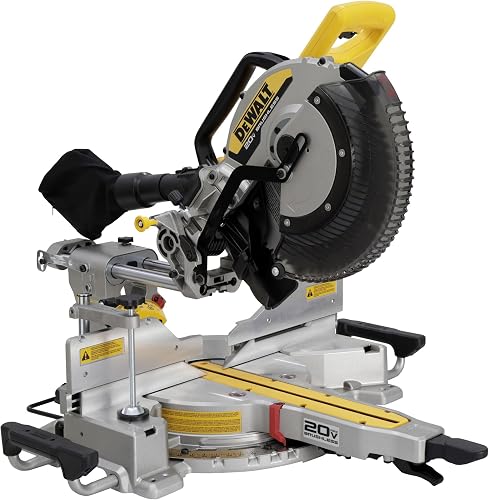 Best for wide trim
DeWalt DCS785B 20V MAX XR 12-Inch Sliding Miter Saw
 Best for frequent moves
Milwaukee 2734-21HD M18 FUEL 10-Inch Sliding Miter Saw Kit
DeWalt vs Milwaukee miter saw: which fits your cuts?
DeWalt has the larger documented cutting capacity, while Milwaukee’s available details don’t provide matching capacity figures. If you regularly cut wide trim or boards, DeWalt gives you concrete limits to compare with your material.
DeWalt states that the DCS785 cuts up to 14 in horizontally, 6-1/2 in baseboard standing up, or 6-1/2 in crown nested. Those figures apply to both DeWalt versions in this comparison.
Milwaukee’s 2734-21HD is a 10 in dual bevel sliding compound miter saw. Its capacity figures aren’t available here, so don’t assume the blade size alone tells you whether it can handle a particular workpiece.
Measure the widest and tallest material you expect to cut. For a clear explanation of the design differences, see our guide to sliding versus compound miter saws.
When does a 12 in blade help?
A 12 in blade suits jobs where the saw’s stated capacity matches the material you need to cut. DeWalt’s horizontal and vertical dimensions give you useful reference points for trim, boards and crown molding.
A larger blade doesn’t remove the need for a suitable blade, stable support and a correct setup. Check the manual for the material and cut you plan to make, and support long stock so it can’t shift.
Is a 10 in saw enough?
A 10 in saw can be a reasonable choice for work that stays within its capacity. Since Milwaukee’s specific capacity figures aren’t included here, check the manual against your stock before buying.
If your regular jobs involve tall baseboard, wide boards or crown molding, confirm the required cut before choosing. Our guide to compound miter saw sizes and types explains how saw size and design affect your options.
Which brand fits your battery setup?
Choose the platform that matches batteries you already use, then verify the exact package contents. This can simplify your cordless setup and helps you avoid buying a saw without the batteries or charger you need.
Both DCS785 models work with DeWalt 20V MAX and FLEXVOLT batteries. The DCS785B is described as tool only, and the DCS785WW1’s battery and charger are sold separately.
Milwaukee’s saw belongs to the M18 FUEL line and requires one lithium-ion battery. The available details don’t specify its battery capacity or a comparable runtime figure.
Before you buy, make a checklist of the saw, batteries, charger and accessories you need at the job. Don’t assume that two packages with similar names include the same power equipment.
For more on the power tradeoff, read corded vs cordless miter saws. If this is your first cordless saw, our cordless compound miter saw guide covers the basic buying questions.
Which saw is easier to carry?
Milwaukee has the lower listed weight at 45 lb, compared with 51.7 lb for the DeWalt tool only. That difference may matter if you carry the saw between work areas or load it into a vehicle often.
Both brands describe carrying handles: DeWalt calls out convenient carry handles, while Milwaukee lists top and side handles. Handle placement and the route you carry the saw along can matter as much as the weight figure.
Think about the full move, including stairs, vehicle loading and setup at the next work area. Also account for the battery and accessories you’ll carry with the saw.
Choose Milwaukee if the listed weight and M18 setup suit your routine. If DeWalt’s greater stated capacity matters more, plan how you’ll transport and support the heavier tool-only saw.
What do you get for dust collection?
DeWalt describes dust capture up to 97% and includes a dust bag and vacuum adapter. Integrated wireless tool control is designed to start a compatible vacuum with the saw’s trigger, though the vacuum is sold separately.
The dust features can help reduce cleanup when you pair the saw with a vacuum. The 97% figure is DeWalt’s claim and shouldn’t be treated as a promise that every cut will leave the work area dust free.
Milwaukee’s available details don’t describe a dust collection system. If dust capture is a priority, check the manual and included components for the exact configuration you’re considering.
Keep the area around the saw clear and use suitable dust control and protective equipment. Follow the saw’s manual for safe operation and cleanup.
What features distinguish the DeWalt saws?
DeWalt highlights cut line indication, regenerative braking and quick bevel settings. These features add practical reasons to choose it if its capacity and battery platform already match your work.
The Cutline blade positioning system provides adjustment-free cut line indication. DeWalt also says regenerative braking helps maximize productivity and battery life, with claimed output of up to 371 cuts in 3-1/4 in MDF base molding or 153 cuts in pressure-treated 4 x 4 timber under stated conditions.
Those cut counts describe particular materials and conditions. Your output can vary with the battery, material and way you work, so use the figures as a manufacturer claim rather than a guaranteed result.
A bevel gear transmission is designed to help minimize power loss. Included bevel pawls allow quick settings at 22.5 and 33.9 degrees.
Milwaukee’s details highlight a durable design, side carrying handles and more runtime, but don’t provide a runtime figure to compare directly. Don’t use the word “runtime” alone as a substitute for a specific battery and workload comparison.
DeWalt DCS785B vs DCS785WW1: what changes?
The two DeWalt models share the same stated capacities and core features, but their package descriptions differ. Check the contents for the exact version so you know whether you need to supply batteries and charging equipment.
The DCS785B is described as tool only. Its included components list a blade, blade wrench, material clamp, vacuum adapter, stabilizer bar, base extensions and bag, as well as a battery and charger.
The DCS785WW1 is also described with a bare tool in its included components. Its battery and charger are sold separately, while a dust bag and vacuum adapter are included.
These descriptions don’t line up cleanly on battery and charger contents. Confirm those items for the exact package you plan to buy, especially if you need a complete cordless setup on day one.
How should you set up and care for a cordless miter saw?
Set up the saw on a stable surface, support the material and verify the cut before powering up. Good setup helps you control long stock and make repeatable cuts with either brand.
Place the saw where the workpiece can sit flat and remain supported through the cut. Keep hands clear of the blade path, secure the material as directed by the manual and make sure the saw is stable before use.
Check that the blade is suitable for the material and that the settings match the cut. For a miter or bevel cut, confirm the angle and support the offcut so it cannot bind or fall.
After work, disconnect or remove the battery as the manual directs before cleaning or making adjustments. Clear dust from the work area, inspect the blade and keep the saw and accessories stored securely.
What common buying and setup mistakes should you avoid?
The most common mistake is buying by blade size or brand name without checking capacity, batteries and package contents. A short pre-buy check can prevent a saw from falling short on your main jobs.
- Assuming the 10 in Milwaukee will cut a specific board: confirm its capacity in the manual before buying.
- Treating DeWalt’s claimed cut counts as guaranteed runtime: battery, material and work pace affect results.
- Forgetting battery and charger needs: verify contents for the exact model and package.
- Choosing by tool weight alone: include the battery and accessories you’ll carry.
- Skipping material support: long stock can shift or sag without a stable support surface.
- Ignoring the blade: match the blade to the material and cut quality you need.
For blade selection help, see our guide to choosing a miter saw blade. Check the manual whenever a specific cut, material or setup is unfamiliar.
Which should you choose for your work?
Choose DeWalt for the larger stated capacities and 20V MAX or FLEXVOLT compatibility; choose Milwaukee for its lower listed weight and M18 platform. If your work needs a specific capacity, verify it before deciding.
The DeWalt DCS785B suits buyers who need wider stated cuts, want DeWalt battery compatibility and can supply the power equipment they need. Skip it if Milwaukee’s lower listed weight is a higher priority or if you don’t need its larger capacity.
The DCS785WW1 suits DeWalt owners who want the same stated capacity and features in that package configuration. Check battery and charger contents before buying, since they’re sold separately.
Milwaukee’s 2734-21HD suits buyers who value a 45 lb listed weight, use M18 tools and need a 10 in dual bevel sliding saw. Skip it if you require a documented capacity for a particular workpiece and can’t confirm that capacity in its manual.
If you’re comparing other DeWalt options, visit our best DeWalt miter saws guide. For more battery-powered choices, see the best cordless sliding miter saws.
Frequently asked questions
Is the DeWalt 12 in saw more powerful than the Milwaukee 10 in saw?
The available details don’t provide a direct power comparison. DeWalt describes its 12 in DCS785 models with specific cut capacities and battery features, while Milwaukee’s details identify a 10 in M18 FUEL saw.
Compare the saws by their capacities and battery platform against your work. Blade size alone doesn’t establish which model has more power for a given cut.
Can a DeWalt 20V MAX battery fit the Milwaukee saw?
No. The DeWalt models are compatible with DeWalt 20V MAX and FLEXVOLT batteries, while the Milwaukee is part of the M18 FUEL line.
Use batteries approved for the exact saw and follow its manual. If you own tools from both brands, plan to keep the separate battery platforms available.
Does the DeWalt cut crown molding?
DeWalt states that the DCS785 can cut up to 6-1/2 in crown nested. Measure your molding and confirm the required orientation and setup in the manual before making the cut.
The measurement is a stated maximum. Your result also depends on how the material is positioned and secured.
Is Milwaukee a better choice if you move the saw often?
It may suit frequent moves if its lower listed weight and M18 platform fit your setup. Milwaukee weighs 45 lb, compared with 51.7 lb for the DeWalt tool only.
Include the battery and accessories in your carrying plan. Handle placement, stairs and how you transport the saw all affect how manageable a move feels.
Do both DeWalt versions include a battery and charger?
The package descriptions differ. The DCS785B’s included components list a battery and charger, while the DCS785WW1’s battery and charger are sold separately.
Confirm the contents for the exact version before buying. That check matters if you need the saw ready to use with a cordless setup.
Frequently asked questions
Is DeWalt or Milwaukee better for a cordless miter saw?
DeWalt is the clearer fit if you need a 12 in blade and stated cut capacities up to 14 in horizontally. Milwaukee may suit you if a 10 in blade and its 45 lb weight fit your work.
Let your battery platform and required cuts guide your choice.
Which saw has the larger cutting capacity?
The DeWalt DCS785 models have stated capacities of up to 14 in horizontally, 6-1/2 in for upright baseboard and 6-1/2 in for nested crown. No matching Milwaukee capacity figure is available here, so check its manual against your material before choosing.
Which cordless miter saw is lighter?
The Milwaukee weighs 45 lb, while each DeWalt is described as 51.7 lb for the tool only. Those figures favor Milwaukee, but a battery and accessories affect what you carry.
Do the DeWalt and Milwaukee saws use the same batteries?
No. The DeWalt saws are compatible with DeWalt 20V MAX and FLEXVOLT batteries, while Milwaukee's model belongs to the M18 FUEL line.
If you already own batteries, compare the platforms and exact package contents.
Does the DeWalt include dust collection?
The DeWalt models are described with dust capture up to 97%, and their components include a dust bag and vacuum adapter. The DCS785B can operate a vacuum through integrated wireless tool control, with the vacuum sold separately.


