9 Best Sliding Miter Saws (October 2026)
The best sliding miter saws include the Skil MS6305-00 10-Inch Dual-Bevel Sliding Miter Saw for home workshops, the Bosch CM10GD 10-Inch Dual-Bevel Glide Miter Saw for tight benches, and the Metabo HPT C12RSH3 12-Inch Dual-Bevel Sliding Miter Saw for right-side angles.
On this page (10 sections)
- How we chose the best sliding miter saws
- Best sliding miter saws for different jobs
- How do you choose a sliding miter saw size?
- What should you check before buying the best sliding miter saw?
- When does a dual-bevel sliding saw save time?
- How should you set up a sliding miter saw?
- What common sliding miter saw mistakes should you avoid?
- How do you care for a sliding miter saw?
- Is a sliding saw worth it for trim work?
- Which sliding miter saw should you choose?
The best sliding miter saw for most buyers is the Skil MS6305-00, a 10-inch model with dual bevel, an LED shadow line and stated 2x12 crosscut capacity at 90 degrees. Bosch suits a tighter bench, while Makita offers the widest stated crosscut in this group.
A sliding saw moves its head across the workpiece, extending crosscut width beyond what a basic chop saw can handle. Your best fit depends on the stock you cut, the space around your bench and whether you need bevels in both directions.
If you're comparing saw styles, start with what a sliding compound miter saw is and our guide to sliding versus compound miter saws. For more models with a 10-inch blade, see the best 10-inch sliding compound miter saws.
Our picks at a glance
-
1
 Best for home workshops
Skil MS6305-00 10-Inch Dual-Bevel Sliding Miter Saw
9.0/10 our score
See it on Amazon -
2
 Best for tight benches
Bosch CM10GD 10-Inch Dual-Bevel Glide Miter Saw
8.6/10 our score
See it on Amazon -
3
 Best for right-side angles
Metabo HPT C12RSH3 12-Inch Dual-Bevel Sliding Miter Saw
8.4/10 our score
See it on Amazon
- 4
 Check it
Ridgid R4210 10-Inch Dual-Bevel Sliding Miter Saw
Best for unusual miters - 5
 Check it
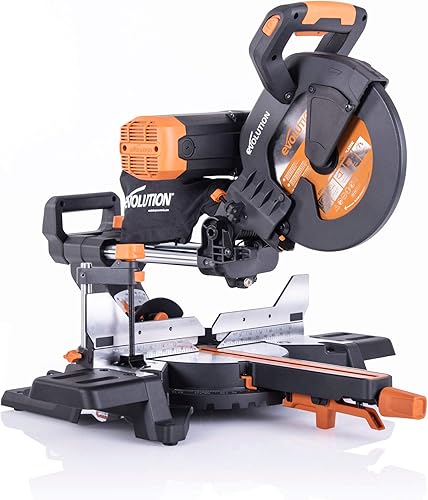
Evolution R255SMS-DB+ 10-Inch Dual-Bevel Sliding Miter Saw
Best for mixed materials - 6
 Check it
Makita LS1219L 12-Inch Dual-Bevel Sliding Miter Saw
Best for wide boards - 7
 Check it
WEN MM1215 12-Inch Dual-Bevel Sliding Miter Saw
Best for broad stock - 8
 Check it
Dovaman 12-Inch Dual-Bevel Sliding Miter Saw
Best for laser alignment - 9
 Check it
Vevor 12-Inch Double-Bevel Sliding Miter Saw
Best for wall-side shops
How we chose the best sliding miter saws
We compared stated blade sizes, cut capacities, bevel and miter ranges, cut-line aids and space-saving features against common workshop needs. Those details help separate a saw for wide boards from one that earns its place through bench clearance or material range.
Capacity figures need context. A saw's maximum crosscut may apply only at 90 degrees, and the same saw may handle a narrower board when tilted for a bevel.
We prioritized models with useful capacity information and called out details that need confirmation. The group covers compact bench placement, wide crosscuts, mixed materials and common home shop work.
| Product | Best for | Blade | Bevel | Cutting capacity | Our score |
|---|---|---|---|---|---|
| Skil MS6305-00 10-Inch Dual-Bevel Sliding Miter Saw | home workshops | 10 in | Dual bevel | 2x12 at 90 degrees | 9.0 |
| Bosch CM10GD 10-Inch Dual-Bevel Glide Miter Saw | tight benches | 10 in | 47 degrees left and right | 8.6 | |
| Metabo HPT C12RSH3 12-Inch Dual-Bevel Sliding Miter Saw | right-side angles | 12 in | 45 degrees left and right | 8.4 | |
| Ridgid R4210 10-Inch Dual-Bevel Sliding Miter Saw | unusual miters | 10 in | 7.9 | ||
| Evolution R255SMS-DB+ 10-Inch Dual-Bevel Sliding Miter Saw | mixed materials | 10 in | 45 degrees left and right | 7.8 | |
| Makita LS1219L 12-Inch Dual-Bevel Sliding Miter Saw | wide boards | 12 in | 48 degrees left and right | 7.3 | |
| WEN MM1215 12-Inch Dual-Bevel Sliding Miter Saw | broad stock | 12 in | 7.2 | ||
| Dovaman 12-Inch Dual-Bevel Sliding Miter Saw | laser alignment | 12 in | 6.9 | ||
| Vevor 12-Inch Double-Bevel Sliding Miter Saw | wall-side shops | 12 in | 45 degrees left and right | 6.8 |
Best sliding miter saws for different jobs
The Skil is the strongest all-around fit for common cuts, while the other picks serve specific needs such as reduced rear clearance, unusual angles or mixed materials. Choose for the cut you make most often, then check the saw's limits for less common work.
Skil MS6305-00 10-Inch Dual-Bevel Sliding Miter Saw: Best for home workshops
- 15 amp motor
- 4,800 RPM
- LED shadow line
- 2x12 crosscut capacity at 90 degrees
A 10-inch blade, dual bevel and LED shadow line suit common home shop cuts. Its stated capacity reaches 2x12 lumber at 90 degrees.
Pros
- LED shadow line
- Dual bevel
- 2x12 crosscut capacity at 90 degrees
Cons
- Corded power limits use away from an outlet
- 10-inch blade has less stated crosscut capacity than the largest 12-inch picks
The Skil MS6305-00 combines a 10-inch blade with a 15 amp motor rated at 4,800 RPM. Its LED shadow line indicates the cut path, and the saw has dual bevel stops at 48 degrees and 45 degrees left, 0 degrees, and 45 degrees right.
For framing and trim, the stated 2x12 crosscut capacity at 90 degrees is a useful benchmark. At 45 degrees, Skil gives a 2x8 capacity, so compare the angle-specific limit with the board you plan to cut.
The miter range reaches 50 degrees left and right, with 11 positive stops at common angles. A center-positioned safety trigger supports either left- or right-handed use, and the included clamp secures stock.
Choose it for a home shop that needs capacity, common angle stops and a visible cut line in one saw. Skip it if you routinely cut stock wider than its stated limits or need a cordless tool.
Bosch CM10GD 10-Inch Dual-Bevel Glide Miter Saw: Best for tight benches
- Axial-Glide system
- Up to 10 in less front-to-back space than similar-capacity slide saws
- 12 in horizontal cut capacity
- Front bevel controls
Its articulated glide arms reduce the front-to-back footprint while retaining a 12-inch horizontal cut capacity. Front-mounted bevel controls are easy to reach.
Pros
- Compact front-to-back footprint
- Front bevel controls
- Wide bevel range
Cons
- 64 lb weight makes it a substantial saw to move
- Corded power
The Bosch CM10GD uses an Axial-Glide system instead of side rails. Bosch says its articulated arms reduce the front-to-back footprint by up to 10 inches compared with slide saws of similar capacity.
That compact layout fits a bench near a wall. The saw has a 12-inch horizontal cut capacity, plus a 5-1/2-inch vertical baseboard capacity and 6-inch nested crown capacity.
Its 15 amp motor runs at 4,800 no-load RPM. The bevel range reaches 47 degrees in both directions, with the lock lever and range selector up front, while a miter detent override allows fine angle adjustment.
Choose Bosch when rear clearance is limited but you still want a 10-inch sliding saw with defined capacity. At 64 lb, it suits a stable bench and a setup that doesn't require frequent lifting.
Metabo HPT C12RSH3 12-Inch Dual-Bevel Sliding Miter Saw: Best for right-side angles
- 12-inch blade
- 4,000 RPM no-load speed
- Xact Cut Shadow Line
- 9 miter detent stops
The 12-inch blade and dual bevel suit buyers who want a larger saw for varied angled cuts. Its miter range extends farther right than left.
Pros
- 12-inch blade
- Xact Cut Shadow Line
- 5-year warranty
Cons
- 53.6 lb weight
- Miter range differs by direction
The Metabo HPT C12RSH3 is a 12-inch option with a 4,000 RPM no-load speed and 45-degree dual bevel range. Its Xact Cut Shadow Line marks the cut path, and one-touch bevel and miter locks allow quick adjustment.
The miter range is 0 to 45 degrees left and 0 to 57 degrees right, with nine detent stops. The extra right-side range can help if your cuts call for angles beyond the common stops.
Metabo HPT includes a 5-year warranty. The saw weighs 53.6 lb, so choose its bench or stand location before moving it into your work area.
Pick it if you want a 12-inch blade and need more miter range to the right. Skip it if your work depends on a particular wide-board capacity that you can't confirm for this model.
Ridgid R4210 10-Inch Dual-Bevel Sliding Miter Saw: Best for unusual miters
- 15 amp motor
- LED cut line and work light
- Adjustable miter and bevel detents
- 70-degree miter range left and right
Its stated 70-degree miter range in both directions stands out for work that needs angles beyond common stops. An LED cut line and work light illuminate the cutting area.
Pros
- Wide miter range
- LED cut line and work light
- Dust port fits common 1-1/4 in wet/dry vacuum adapters
Cons
- 69.2 lb weight
- Crown molding stops are sold separately
The Ridgid R4210 stands out for its stated miter range of 70 degrees to the left and right. Adjustable miter and bevel detents include a bypass for setting angles between common stops.
An LED cut line and work light illuminate the work area. The built-in dust port works with common 1-1/4-inch wet/dry vacuum adapters, and crown stop mounting holes accept common stops, with compatible Ridgid stops sold separately.
Ridgid describes the saw as a 15 amp, 10-inch model. The wide stated range may suit special trim or frame angles, but confirm the manual's setup instructions for your cut.
Choose Ridgid when wide miter adjustment is central to your work. At 69.2 lb, it makes more sense on a dedicated stand or bench than as a saw you move often.
Evolution R255SMS-DB+ 10-Inch Dual-Bevel Sliding Miter Saw: Best for mixed materials
- Multi-material blade
- Cuts wood, wood with embedded nails, composite decking, mild steel and plastic
- 45-degree dual bevel
- 50-degree miter left and right
Evolution describes this saw as suited to wood, embedded nails, composite decking, mild steel and plastic with one blade. That makes it a distinct choice when projects involve more than clean wood.
Pros
- Multi-material cutting capability
- Dual bevel
- 3-year warranty
Cons
- No stated crosscut capacity
- Follow the manual's material guidance
The Evolution R255SMS-DB+ is the specialty choice for jobs that move between wood and other materials. Evolution says its included blade can cut wood, wood with embedded nails, composite decking, mild steel and plastic.
For trim or framing, the saw offers 45-degree bevels left and right and a 50-degree miter range in each direction. Evolution says cuts in mild steel produce virtually no sparks and have a cool-to-the-touch finish.
Read the manual for blade use and material limits before switching stock. The available capacity details don't give a crosscut width, so check that point if you often cut wide boards.
Choose Evolution when one saw needs to cover multiple materials. Skip it if your work is wood-only and a clearly stated crosscut capacity is a deciding factor.
Makita LS1219L 12-Inch Dual-Bevel Sliding Miter Saw: Best for wide boards
- 12-inch blade
- 15-inch crosscut capacity at 90 degrees
- Single slide-glide rail system
- Dual dust collection ports
The stated 15-inch crosscut capacity at 90 degrees is the widest figure in this roundup. Its two-steel-rail slide-glide design is made to operate flush against a wall.
Pros
- 15-inch crosscut capacity at 90 degrees
- Slide-glide design reduces footprint
- Dual dust collection ports
Cons
- 81.6 lb weight
- Laser is a line guide, so confirm it suits your preferred setup
Makita's LS1219L pairs a 12-inch blade with a 15-inch crosscut capacity at 90 degrees, the widest stated crosscut figure among these picks. Its two-steel-rail slide-glide system is designed to reduce the footprint and allow placement flush against a wall.
The saw has a 0-to-60-degree miter range left and right, with stops at common angles including 15, 22.5, 31.6, 45 and 60 degrees. Its bevel range reaches 48 degrees in both directions, and the lock is at the front.
A built-in laser indicates the cut line, and dual dust collection ports support dust extraction. At 81.6 lb, this is the heaviest saw in the group, so plan a permanent location and sturdy support.
Choose Makita for its stated wide crosscut capacity and a slide system intended for wall-side use. Skip it if frequent lifting or transport is part of your routine.
WEN MM1215 12-Inch Dual-Bevel Sliding Miter Saw: Best for broad stock
- 15 amp motor
- Cuts boards up to 13.25 in wide and 4.5 in thick
- Dual-rail slide system
- LED cutline guide
WEN gives a maximum board size of 13.25 inches wide by 4.5 inches thick. Its dual-rail slide system is designed to let the saw sit flush against a wall.
Pros
- Broad stated board capacity
- LED cutline guide
- Two-year warranty
Cons
- 24.25 kg weight
- The product data gives a 6.5-inch blade length despite the 12-inch model name, so confirm blade size before buying
WEN gives the MM1215 a maximum board size of 13.25 inches wide by 4.5 inches thick. Its 12-inch model name, dual-rail slide system and LED cutline guide make it appealing for broad boards and benches near a wall.
The saw bevels and miters up to 45 degrees in either direction, with nine miter stops. WEN says the package includes an 80-tooth carbide-tipped blade, table extension arms, adjustable support fences, a clamp, dust bag and a two-year warranty.
One detail needs resolving before you buy: the product data gives a 6.5-inch blade length despite the 12-inch model name. Confirm the blade size with WEN and don't rely on the model name alone.
Choose it for the broad stated board dimensions and included support pieces once you confirm the blade detail. Its published weight is 24.25 kg, so factor that into stand placement.
Dovaman 12-Inch Dual-Bevel Sliding Miter Saw: Best for laser alignment
- 12-inch blade
- Laser guide
- 4.2 x 13 in maximum cutting capacity
- 9 common angle presets
A laser guide and nine common angle presets give this saw a straightforward setup for wood projects. Dovaman advises checking and adjusting the miter angle before use if shipping has caused a shift.
Pros
- Laser guide
- 12-inch blade
- Includes clamp and dust bag
Cons
- Check miter alignment before use
- Corded power
The Dovaman 12-inch saw combines a laser guide with a stated maximum cutting capacity of 4.2 x 13 inches. Nine angle presets cover 0, 15, 22.5, 30 and 45 degrees on both sides.
Its 15 amp motor reaches up to 3,800 RPM, and the saw bevels 45 degrees in either direction. The package includes a 40-tooth blade, dust bag, clamp and spare carbon brushes.
Dovaman advises checking the miter angle and adjusting it if shipping caused a shift. Verify the setup before relying on preset angles for repeated cuts.
Choose it if a laser guide and a 12-inch blade are priorities. Skip it if the 4.2 x 13-inch capacity doesn't cover your stock or if you need a published capacity at other angles.
Vevor 12-Inch Double-Bevel Sliding Miter Saw: Best for wall-side shops
- 12-inch blade
- Axial sliding system
- LED guide
- 45-degree bevel left and right
The axial sliding system is designed to let the saw sit against a wall while moving forward and back for wider cuts. Its LED guide marks the cutting line.
Pros
- Wall-side placement design
- LED guide
- Dual bevel
Cons
- No stated crosscut capacity
- Confirm cut capacity and blade details for your stock before buying
The Vevor 12-inch double-bevel saw uses an axial sliding system that moves forward and back. Vevor says its layout allows placement against a wall, and an LED guide marks the cut line on the work surface.
It bevels up to 45 degrees left and right, with a stated speed of 5,000 RPM. The base is aluminum, and the saw is corded.
The available capacity details don't state a crosscut width, so compare capacity with your usual stock before buying. Check that the blade and cut settings suit the wood, composite decking or laminates you plan to cut.
Choose Vevor when wall-side placement and a 12-inch blade are the main requirements. Ask for capacity and blade details if your work includes wide boards or thick trim.
How do you choose a sliding miter saw size?
Choose a blade size by the saw's actual cut capacity, not blade diameter alone. A 12-inch blade may cut wider stock on some models, but capacity varies with the slide, fence and angle.
A 10-inch saw can be enough for common trim and framing. The Skil specifies 2x12 crosscuts at 90 degrees and 2x8 at 45 degrees, while Bosch states a 12-inch horizontal cut capacity and separate vertical molding limits.
The Makita's 15-inch crosscut at 90 degrees is useful for unusually wide boards, but its weight is 81.6 lb. If you mainly cut typical trim, a smaller saw with enough capacity for your stock may be easier to place and move.
Write down the widest and tallest stock you expect to cut, including the occasional large workpiece. Then compare those measurements with each model's crosscut, bevel and vertical capacity instead of treating a single maximum figure as a fit for every cut.
What should you check before buying the best sliding miter saw?
Before buying the best sliding miter saw for your shop, check capacity, bench clearance, power and the cuts you make most. These practical checks often matter more than a long list of features.
Start with the material and cut. Note the maximum width and thickness, and whether you'll cut square ends or angles.
Also note how often you'll need compound cuts. A 90-degree capacity doesn't automatically apply at a bevel, so look for a limit at the angle you need.
Next, compare the saw's footprint with your work area. The slide must travel freely, and long boards need support to the left and right of the table.
A design intended for wall-side placement can help, but it doesn't support lumber or make controls easier to reach.
Check whether the cut-line aid suits your workflow. An LED shadow line or LED guide marks a blade shadow or cut path, while the Makita includes a laser.
These aids help you align stock, but make a sample cut and confirm the actual kerf and alignment before repeating a batch.
Finally, account for weight and dust collection. A heavy saw needs a stable support surface and is less appealing if you move tools after each job.
A dust bag or vacuum connection can help manage debris. Keep the cutting area and workpiece visible.
When does a dual-bevel sliding saw save time?
A dual-bevel sliding saw tilts left and right, so you can bevel in either direction without turning the workpiece around. That can reduce repositioning on repeated trim cuts.
This feature is useful when your projects call for compound angles or repeated molding cuts. Read our guide to compound angles on a miter saw for setup basics, and see what a dual-bevel miter saw does for the difference from a single bevel.
If you mostly cut square boards or make miters without tilting the blade, dual bevel may not be essential. Give priority to the capacity and fence setup that match your stock.
How should you set up a sliding miter saw?
Set up the saw on a stable, level support with room for the head to travel and for the workpiece to rest flat. Before cutting, check that the stock is secure and supported on both sides of the blade.
Read the manual for the model's assembly, adjustment and safety steps. Check the miter and bevel settings before a run of repeated cuts, and confirm that the blade path clears the fence and table for the angle you plan to use.
For a new saw, a test piece is a practical way to confirm the angle and cut line before using finished stock. Dovaman specifically advises checking miter alignment and adjusting it if shipping has caused a shift.
Use the clamp when one is included and suited to the material. Keep hands clear of the blade path, wait for the blade to stop before moving a cut piece, and use eye and hearing protection as directed by the manual.
What common sliding miter saw mistakes should you avoid?
The most common buying mistake is choosing by blade diameter alone. A larger blade doesn't guarantee a wider cut, and stated capacity can change with the bevel angle or the way material sits against the fence.
Another mistake is ignoring the work area. Measure space behind and beside the saw, and allow for long stock and supports.
A compact slide mechanism doesn't remove the need to control a long board safely.
Don't assume a laser or shadow line eliminates setup checks. Align the workpiece and confirm the cut on a scrap piece.
Make sure the blade follows the intended side of the marked line. The width of the kerf matters when two pieces must meet cleanly.
Avoid feeding stock that isn't supported or held securely. Check for movement before starting the cut, and follow the saw's manual for material, blade and angle limits.
If a saw's capacity is unclear, get that detail before buying instead of guessing from its blade size.
How do you care for a sliding miter saw?
Keep the table, fence and slide mechanism clear of sawdust so stock can sit flat and the head can travel freely. Unplug the saw before cleaning or making adjustments, and follow the manual's instructions for cleaning and maintenance.
Check the blade for buildup or damage and replace it when needed with a blade suitable for the material and saw. A dull or unsuitable blade can affect cut quality and make it harder to keep steady control.
Inspect the fence and angle settings periodically, especially if the saw has been moved or transported. A quick square check and a sample cut can reveal a shifted setting before it affects a batch of parts.
Manage dust with the included bag or a compatible vacuum connection where available. Keep vents and moving parts clear according to the care steps in the manual, and store accessories where they won't interfere with the slide or controls.
Is a sliding saw worth it for trim work?
A sliding saw is useful for trim when the board is wider than a standard miter saw's crosscut limit. It can also make miter and bevel combinations for corners, within the model's angle and capacity limits.
For narrower casing and baseboard, a non-sliding saw may already cover the work. Compare the board width and height you cut most often with the saw's 90-degree, bevel and vertical capacities.
If baseboard corners are your main project, follow our baseboard corner cutting guide and check whether its examples match your saw's angle range.
A sliding saw is less compelling if you seldom cut wide stock and have little room for the sliding mechanism or long boards. In that case, compare compact miter saw options and choose a model whose capacity covers your routine cuts.
Which sliding miter saw should you choose?
Choose the Skil MS6305-00 for a home shop that needs a 10-inch saw, shadow line and clearly stated crosscut capacity. Choose Bosch if bench clearance is tight, or Metabo HPT if a 12-inch blade and wider right-side miter range fit your work.
Pick Makita when the stated 15-inch crosscut matters and you can give its heavy frame a permanent, stable home. Choose Evolution for projects that mix wood, plastic, composite decking and mild steel.
For the WEN, confirm the blade size before buying; for Dovaman or Vevor, verify capacity against your stock.
For more models by blade size, continue to the 10-inch sliding saw picks or browse our sliding miter saw guide. The best sliding miter saw is the one whose angle-specific capacity fits your real cuts and whose setup works in your shop.
Our top 3 picks at a glance
-
1
Best for home workshops
Skil MS6305-00 10-Inch Dual-Bevel Sliding Miter Saw
9.0/10 our score
See it on Amazon -
2
Best for tight benches
Bosch CM10GD 10-Inch Dual-Bevel Glide Miter Saw
8.6/10 our score
See it on Amazon -
3
Best for right-side angles
Metabo HPT C12RSH3 12-Inch Dual-Bevel Sliding Miter Saw
8.4/10 our score
See it on Amazon
Frequently asked questions
What is a sliding miter saw best for?
A sliding miter saw is useful when a board is too wide for a basic chop saw's crosscut capacity. Its head moves across the workpiece to extend the cut width.
Check the saw's stated capacity at the angles you use, since a 90-degree crosscut and a bevel cut may allow different board sizes.
Is a 10-inch or 12-inch sliding miter saw better?
Choose a 10-inch saw when its stated capacity covers your usual boards and you prefer a smaller blade. A 12-inch saw may offer greater capacity, but compare each model's actual crosscut and vertical limits.
Blade size alone doesn't tell you how wide or thick a board the saw can cut.
Do you need a dual-bevel sliding miter saw?
A dual-bevel saw tilts both left and right, so you can make bevel cuts in either direction without turning the workpiece around. That can save repositioning on repeated trim cuts.
A single-bevel saw can still work well if your projects rarely need bevels in both directions.
Does a sliding miter saw need extra space behind it?
Many sliding saws need room for their rails or slide mechanism to move. A glide or forward-rail design may reduce the space needed behind the saw, but layouts differ by model.
Check the footprint and clearance needs before setting up a bench near a wall.
Can a sliding miter saw cut baseboard and crown molding?
Yes, if the saw's vertical and nested crown capacities fit the molding. Those capacities vary by model, and the maximum crosscut width doesn't describe how tall a board fits against the fence.
For setup help, see our guide to cutting baseboard corners.


