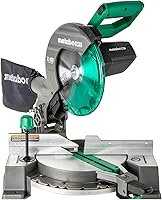
What Is a Dual Bevel Miter Saw?
A dual bevel miter saw tilts its blade left and right, so you can cut bevels in either direction without turning the workpiece around. It can also swivel across the base to make miter cuts.
On this page (8 sections)
- What does dual bevel mean on a miter saw?
- How is a bevel cut different from a miter cut?
- What is the difference between dual bevel and single bevel?
- Does dual bevel mean the saw is sliding?
- When is a dual bevel miter saw useful?
- How do you use a dual bevel miter saw safely?
- Which dual bevel miter saw should you consider?
- Is a dual bevel miter saw worth choosing?
A dual bevel miter saw tilts its blade left and right, so you can make bevel cuts in either direction without flipping the workpiece. The saw head can also swivel across the base for miter cuts, letting you angle the cut across a board and through its thickness.
Dual bevel is useful when a project calls for matching bevels on opposite sides, such as trim corners. If you usually cut square ends or bevel in one direction, a single bevel model may do the job.
What does dual bevel mean on a miter saw?
Dual bevel means the blade tilts to both sides of the saw. You can change bevel direction by tilting the head instead of turning the board around.
A miter saw has two separate angle controls. The miter setting swivels the saw head left or right across the base, while the bevel setting tilts the blade through the board's thickness.
The DeWalt DWS716 is a double-bevel compound saw with bevel settings from 0 to 48 degrees on both sides. It has a 12-inch blade and miter settings from 0 to 50 degrees left and right.
Dual bevel doesn't mean every model reaches the same angles or has the same stops. Check the saw's manual for its adjustment range and how to lock each setting before you cut.
How is a bevel cut different from a miter cut?
A bevel cut angles through the board's thickness; a miter cut angles across its face. They use different saw adjustments, even when you make both cuts in one pass.
A miter cut is common at the ends of trim and frames, where two angled pieces meet at a corner. A bevel cut changes the edge angle along the board's thickness.
For a clearer comparison, see miter cut vs bevel cut. If you set both angles together, you're making a compound cut.
What is a compound miter cut?
A compound cut combines a miter angle and a bevel angle. It's useful for trim that meets at a corner while also leaning against a wall or ceiling.
The two settings can affect each other, so mark the workpiece and confirm which face sits against the fence. Our guide to how to cut compound angles on a miter saw walks through the setup.
What is the difference between dual bevel and single bevel?
A dual bevel saw tilts both ways; a single bevel saw tilts in one direction. Both can make bevel cuts, but a single bevel saw may require you to turn the workpiece to make the opposite-hand cut.
That extra repositioning can add time on a run of crown molding or other trim with alternating angles. For occasional cuts in one direction, the simpler adjustment may be enough.
The DeWalt DWS713 is a 10-inch single-bevel compound saw. Its bevel range is 0 to 48 degrees left and 0 to 3 degrees right, so compare its direction and range with the cuts your project needs.
Before buying, think about the number of repeated cuts and whether flipping long or marked boards will be awkward. The 10-inch blade size alone doesn't tell you whether a saw's bevel setup fits your work.
Does dual bevel mean the saw is sliding?
No. Dual bevel describes how the head tilts, while sliding describes how it moves forward and backward.
These are separate features, and a saw can have both.
A sliding saw can increase crosscut capacity by moving the blade across a wider board. A dual bevel feature instead changes which direction the blade tilts.
The Evolution R255SMS-DB+ combines both features. It's a 10-inch sliding saw with dual bevel angles from 45 degrees left to 45 degrees right, plus miter settings from 50 degrees left to 50 degrees right.
The Skil MS6305-00 also combines dual bevel and sliding action. It has bevel stop positions at 48 and 45 degrees left, 0 degrees, and 45 degrees right.
For more detail on the rails and their role in cutting width, read what a sliding compound miter saw is. If width is your main concern, compare the board size with the saw's stated capacity.
When is a dual bevel miter saw useful?
Choose dual bevel when you regularly need bevels in both directions and want to avoid turning the workpiece. It can make repeated trim cuts easier to set up.
It can help with crown molding, picture frames, and other jobs where bevel direction alternates between pieces. For occasional square cuts or one-sided bevels, you may not use the extra adjustment.
Look at the bevel stops, miter range, blade size, and whether the saw slides. Those features affect how the tool fits your material and repeat cuts; the word “dual” alone doesn't describe its capacity.
How do you use a dual bevel miter saw safely?
Set the angles, support the board, and keep your hands clear of the blade path. Follow the saw manual for setup, clamping, and blade changes.
Unplug the saw before adjusting or changing the blade. Secure short or narrow pieces with the saw's clamp or another method approved by the manual, and keep the board flat against the fence and base.
Make a test cut in scrap to confirm the miter and bevel directions. The left and right sides can feel reversed depending on which face of the workpiece you mark and position.
Keep the guard in place and wait for the blade to stop before lifting the saw head. Wear eye and hearing protection, and don't cut material the saw or blade isn't designed for.
Which dual bevel miter saw should you consider?
Match the saw to the cuts you make most often. A dual-bevel model handles left and right bevels, while sliding rails may help when you need to crosscut wider stock.
The Skil MS6305-00 pairs a 10-inch blade with dual bevel adjustment and sliding action. The DeWalt DWS716 has a 12-inch blade and dual bevel adjustment, while the Evolution R255SMS-DB+ pairs dual bevel with sliding action.
The DeWalt DWS713 offers a single-bevel option. For a broader overview of sizes and types, see compound miter saws: sizes, types and picks.
If you mainly need to decide whether 10 inches is enough, read is a 10-inch compound miter saw big enough?.
Is a dual bevel miter saw worth choosing?
A dual bevel miter saw makes sense if you often cut bevels in both directions and want to keep the same face of the board against the fence. Choose a single bevel model if your work rarely changes bevel direction, and consider a sliding saw if crosscut width matters most.
Next, compare the sliding and compound miter saw differences with the materials and cuts in your project.
Frequently asked questions
What does dual bevel mean on a miter saw?
Dual bevel means the saw head tilts to the left and right for angled cuts through a board's thickness. You can make bevels in either direction without flipping the workpiece.
The saw can also swivel across its base for miter cuts, with available angles depending on the model.
Is a dual bevel miter saw better than a single bevel?
A dual bevel saw saves repositioning when a project needs bevels in both directions, such as matching trim pieces. A single bevel saw can still make those cuts, but you may need to turn the board or reset your layout.
The better choice depends on how often you make paired bevel cuts.
Can a dual bevel miter saw make compound cuts?
Yes. A compound cut combines a miter angle across the board with a bevel through its thickness.
Set both angles on the saw, secure the workpiece, and make a test cut on scrap before cutting finished material.
Does dual bevel mean the saw is sliding?
No. Dual bevel describes the direction the saw head tilts.
Sliding describes whether the head moves forward and backward on rails, which can increase crosscut capacity.
A saw may have either feature alone or both.