How Much Is a Compound Miter Saw?
A compound miter saw usually costs about 130 dollars to 550 dollars, with 10-inch corded models at the low end and 12-inch saws toward the top. Sliding versions and extra features push the price higher.
On this page (8 sections)
- What is the typical price range for a compound miter saw?
- Why do prices vary so much between models?
- Does blade size change how much a compound miter saw costs?
- How much does a sliding saw add?
- Do cordless models cost more than corded ones?
- Which features are worth paying for?
- What else should you budget for?
- How much should you spend for your projects?
A compound miter saw usually costs about 130 dollars to 550 dollars, with 10-inch corded models at the low end and 12-inch saws toward the top. Sliding versions and extra features push the price higher.
Knowing how much is a compound miter saw depends mostly on blade size, sliding rails and how much accuracy you need. A blade, a stand and a few spare parts add to the total, and a bargain saw can cost more over time if it drifts out of square.
This guide breaks down what moves the price so you can pick the right tier.
What is the typical price range for a compound miter saw?
Most 10-inch corded compound saws land in the budget to mid-range band, and 12-inch or sliding saws move into the premium band. The saw type matters more than the brand name when you compare costs.
A basic 10-inch single-bevel saw covers crosscuts, miters and bevels for trim and framing. Move up to a 12-inch blade and you gain crosscut capacity for wider boards.
Add sliding rails and the price climbs again because the saw carries more parts and a larger base. Cordless models cost more up front because the battery and charger are part of the package, and you also commit to one brand's battery system.
If you mostly cut in a shop with an outlet nearby, a corded saw gives more power for less money.
Why do prices vary so much between models?
Blade size, motor power, miter stops and build quality set the price more than any single feature. Two 10-inch saws can sit in different tiers because one has a larger table and more positive stops.
A 15-Amp motor with a high no-load speed handles dense lumber without bogging down. A stainless-steel miter detent plate with more positive stops lets you return to common angles quickly, and a tall sliding fence supports more material upright, which matters for crown molding and baseboard.
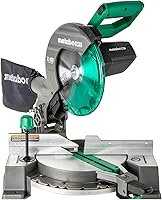
Portability also affects cost. The Metabo HPT C10FCG2 weighs about 24 lb, while the DeWalt DWS713 is closer to 31 lb.
If the saw stays in one shop, weight matters less than table size and fence height.
Which saws fit the budget tier?
The Genesis GMS1015LC is the lowest-cost pick here, and its 60-tooth carbide blade comes installed. A laser guide marks the cut line, and an electric brake stops the blade in seconds.
It handles compound cuts for crown molding, picture frames and shadow boxes. The miter range goes 45 degrees left and right with 9 positive stops.
Its max capacity at 45 by 45 degrees is 1-3/8 inches high by 3-5/16 inches wide, so check that against the trim you plan to cut.
Which saws fit the mid-range tier?
The Metabo HPT C10FCG2 sits in the middle, with a 15-Amp motor, a 10-inch table and a vice clamping system. It weighs about 24 lb and has an adjustable bevel range of 0-45 degrees to the left.
The miter range runs 0-52 degrees left and right, which covers most trim work. Metabo HPT backs the tool body with a 5-year warranty.
For a saw you'll carry between rooms or job sites, the lower weight is the practical draw.
Which saws fit the premium tier?
The DeWalt DWS713 sits at the top of this group. It has a stainless-steel miter detent plate with 14 positive stops and a tall sliding fence that supports 4-1/4-inch base vertically.
Its bevel range runs 0-48 degrees to the left and 0-3 degrees to the right. The 2x6 crosscut capacity at 90 degrees and 2x4 capacity at 45 degrees cover common framing cuts.
At about 31 lb it's the heaviest of the three, so it suits a fixed shop spot more than daily hauling.
Does blade size change how much a compound miter saw costs?
Yes. A 12-inch saw costs more than a 10-inch saw of the same type, and the gap widens once you add sliding rails.
The larger blade and base cost more to make and ship.
A 12-inch blade reaches wider boards and thicker posts in a single pass. That matters if you cut 4x4 posts or wide shelving, while a 10-inch saw handles most trim, decking and 2x6 lumber, so many home workshops don't need the bigger size.
Blades themselves also vary. A 40-tooth blade suits general cutting, while an 80-tooth blade leaves a cleaner edge on trim.
A spare finish blade adds to the total, so price it in when you compare tiers.
How much does a sliding saw add?
Sliding rails add a noticeable step in price over a plain compound saw at the same blade size. The rails and larger base let the blade travel forward to crosscut wider material.
A sliding saw earns its cost when you cut wide boards, thick posts or long molding that won't fit under a fixed blade. If your work is mostly 2x4 framing and standard trim, a non-sliding compound saw covers it for less.
Our comparison of sliding vs compound miter saw helps you decide which one fits your bench and your boards. If you already know you want the extra reach, browse the best compound miter saws to compare sliding and non-sliding options side by side.
Do cordless models cost more than corded ones?
Yes, a cordless compound miter saw costs more up front than a corded saw of similar size. The battery and charger are part of the package, and you stay within one brand's battery platform.
Corded saws run on wall power and give steady output for long cutting sessions. That makes them the better value for a shop or garage with an outlet nearby, while cordless saws earn their cost when you cut on a deck, in a field or anywhere the nearest outlet is far away.
If you already own batteries from a tool brand, a bare-tool cordless saw can cost less than a kit. Price the batteries first if you're starting from zero, since the total for a cordless setup can land well above a corded saw of the same blade size.
Which features are worth paying for?
Worth paying for: a solid miter detent plate, clear positive stops, a tall fence and a comfortable clamping system. These features affect cut accuracy and repeatability more than cosmetic extras do.
A miter scale with easy controls helps you return to common angles without guesswork, and adjustable bevel stops keep bevel cuts consistent. A vice or hold-down clamp keeps the workpiece steady so your hands stay clear of the blade.
A laser or shadow line helps alignment on repeated cuts, though it's a convenience rather than a requirement. A dust bag catches most chips, and a shop vacuum handles more.
Built-in carry handles and lower weight matter if the saw travels.
What else should you budget for?
Plan for a stand or workbench, a spare blade and safety gear on top of the saw price. These extras make the saw easier and safer to use from day one.
A sturdy stand or bench brings the saw to a comfortable working height and supports long boards, and extension wings help on long stock. A spare finish blade covers trim work after the general blade does the rough cuts.
Safety gear includes eye protection and hearing protection. A dust mask helps when you cut treated or manufactured wood.
Most saws include a blade wrench and a dust bag, so check what's in the box before buying extras.
How much should you spend for your projects?
Spend at the budget tier for occasional trim and framing, and at the mid-range or premium tier for daily or precision work. The job you do most often decides which tier pays off.
For occasional home projects, a budget 10-inch saw with a laser guide covers crosscuts, miters and bevels. For steady trim work where square cuts matter, the mid-range Metabo HPT gives a wide miter range and a 5-year tool body warranty at a lighter weight.
For a fixed shop bench and wide material, the DeWalt's 14 positive stops and tall sliding fence justify the higher cost. Think about how much a compound miter saw is worth to you before you buy, because a saw that stays square saves time on every cut.
To see how compound cutting works, read how does a compound miter saw work, and compare a plain miter saw vs compound miter saw if you're still deciding between the two types.
Match the price to your projects, not to the biggest feature list. Buy the saw that covers the widest board you actually cut, then spend the savings on a good blade and a stable stand.
Frequently asked questions
Is a 10-inch compound miter saw big enough for most home projects?
Yes for trim, molding, decking and framing up to 2x6 lumber. A 12-inch saw gives more crosscut capacity for wide boards and thick posts, but it costs more and weighs more to move around.
Why do sliding saws cost more than non-sliding models?
Sliding rails let the blade travel forward to cut wider boards, which adds extra parts and a bigger base. That extra reach is the main reason a sliding compound miter saw sits above a plain compound saw at the same blade size.
Does a laser guide add much to the price?
Usually only a small amount. The laser makes alignment quicker on repeated cuts, while the motor, table size and miter stops do more to set the price than a light line does.
Should I buy a cordless compound miter saw instead?
Only if you cut away from an outlet often. A cordless saw costs more up front because the battery and charger are part of the package, and you stay tied to one brand's battery system.
What else should I budget for besides the saw?
Add a stand or workbench, a spare blade for finish work and safety gear like glasses and hearing protection. A dust bag usually comes in the box, so you may not need a shop vacuum at first.