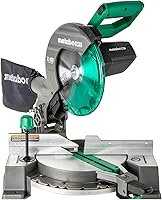
How to Cut Laminate With a Miter Saw
To cut laminate boards with a miter saw, score the cut line on the finished face first, then make a steady pass with a fine-tooth carbide blade at full speed. Support the board, keep it flat against the fence, and tape the line to stop chipping.
On this page (9 sections)
- How do you set up a miter saw for laminate?
- Why should you score the cut line first?
- How do you cut laminate boards with a miter saw safely?
- Which blade should you use for laminate?
- Does a sliding or fixed miter saw cut laminate better?
- How do you stop laminate from chipping at the back edge?
- What blade speed and feed rate work best on laminate?
- How do you finish the edge after cutting laminate?
- Doing the cut in order
To cut laminate boards with a miter saw, score the finished face along the cut line, then make a steady pass with a fine-tooth carbide blade at full speed. Support the board flat against the fence, tape the line, and let the blade reach full speed before it touches the material.
That sequence stops the face layer from chipping, which is the whole problem with laminate.
Laminate is a thin printed layer bonded to a fiberboard core, so it behaves differently from solid wood. The core cuts like dense particleboard, while the wear layer is abrasive and brittle.
A miter saw is a fast, accurate crosscut tool for planks, trim and shelf boards when you set it up around those two materials.
How do you set up a miter saw for laminate?
Set the saw square to the fence, fit a fine-tooth blade, and support both sides of the board. A laminate crosscut fails at the setup stage more often than at the blade.
Unplug the saw before changing blades. A blade with 60 or more teeth cuts laminate cleanly, and the DeWalt set below adds a 60-tooth option for finishing work.
Tighten the arbor bolt, then check that the blade spins free by hand.
Clean the fence and table so dust and grit don't lift the board. Measure the board and mark the cut line on the finished face with a pencil, then check the angle against a square.
If you are new to the tool, our guide to what a miter saw is used for covers the basic controls before you start.
Why should you score the cut line first?
Scoring cuts the brittle wear layer before the teeth arrive, so the edge stays crisp instead of splintering. It takes about a minute per board.
Run a sharp utility knife along the pencil line using a square as a guide. Score through the printed face layer only, not the core.
A light pass is enough; heavy pressure can wander.
Masking tape over the line supports the fibers during the cut. Press it down firmly, then score through the tape and the face together.
This step gives the best result on wide planks where a chip would be visible. If you skip it, cut slowly and accept a slightly rougher edge.
How do you cut laminate boards with a miter saw safely?
Mark, tape, score, then cut with the board clamped flat and the blade at speed. Handholding a long board near the blade is the main risk with this tool.
- Place the board flat on the table with the finished face up.
- Line the scored mark up with the blade kerf, using the laser or a light pass.
- Pull the saw head forward on a sliding saw, then start the motor.
- Lower the blade smoothly and let the teeth cut, never forcing it.
- Release the trigger, wait for the blade to stop, then lift the head.
Keep your fingers well clear of the line, and clamp short boards. Long laminate planks need a raised support at the fence side; our steps for how to use a miter saw to cut long boards cover outfeed support and improvised stands.
Wear safety glasses and a dust mask. Laminate dust is fine and heavy, so empty the dust bag between sessions.
Which blade should you use for laminate?
A fine-tooth carbide blade with 60 or more teeth, because laminate is abrasive and a rough blade chips the edge. Tooth count matters more than blade diameter here.
A 12-inch blade fits 12-inch saws only. Check your saw's arbor size and rated diameter before buying anything, and never mix sizes.
The DeWalt DWA112CMB pack pairs a 40-tooth blade for faster cuts with a 60-tooth blade for finish work. Its 60-tooth blade covers most laminate trim and shelf work.
Laminate also dulls blades faster than softwood, so swap to a sharp blade when the cut starts to burn or tear. That is the sign the carbide is past its best.
Does a sliding or fixed miter saw cut laminate better?
A sliding saw handles wider laminate boards and gives a smoother draw cut because the head travels through the material. A fixed saw is fine for narrow trim and planks under about 6 inches.
Wider flooring planks and shelf boards need more crosscut capacity. A sliding saw lets you start the cut from the front edge and pull back through the board, which reduces chip-out at the trailing edge.
The Evolution R255SMS+ is a 10-inch sliding saw with a multi-material blade that cuts wood, plastic and metal. It handles laminate boards and the trim around them without a blade change.
It also cuts 50 degrees left and right at the miter and 0 to 45 degrees in bevel. That range covers the corner cuts on laminate trim and end caps.
If your plans include framing, check whether the saw handles thick stock in our answer to can a miter saw cut a 4x4 before you decide.
How do you stop laminate from chipping at the back edge?
Tape the back edge too, or take a light scoring pass on that side, because the teeth exit there and push the laminate away from the core. This is the hidden cause of chips on otherwise clean cuts.
Slow the feed rate on the final inch so the teeth don't catch the unsupported edge. Clamping a scrap board behind the cut line supports the exit face and gives the fibers something to lean against.
On sliding saws, a zero-clearance insert made from hardboard or plywood reduces tear-out. Check the insert is level with the table so the board doesn't rock.
The bevel control on a dual-bevel saw also lets you turn the head instead of the board. The Evolution R255SMS-DB+ offers 45 degrees of bevel left and right, which helps keep the face pointing up on angled trim cuts.
For the difference between blade tilt and table swing, see miter saw vs compound miter saw before tackling a compound corner.
What blade speed and feed rate work best on laminate?
Full motor speed and a slow feed, because the blade needs speed to slice the wear layer rather than tear it. Laminate rewards patience more than force.
Let the blade spin up completely. Most miter saws run around 2,500 rpm, and the teeth cut cleanest at their working speed.
Push down gently and steadily, and keep the board pressed against the fence. If the blade slows or the cut line wanders, stop and check the setup.
Two passes work on stubborn boards: a shallow scoring pass through the face layer, then a full-depth cut. Never cut dry laminate with a dull blade; it burns and smells, and the edge tears.
How do you finish the edge after cutting laminate?
Lightly sand or file the cut edge, then seal it if the edge will show or sit near moisture. Laminate doesn't take paint or stain like wood, so the finish matters.
Run a fine file or 220-grit paper along the edge at a shallow angle to knock off burrs. Don't sand the printed face or you'll dull it.
Edge banding or trim strip hides the core on shelf fronts and counter edges. For joints, test-fit the boards dry first and adjust with a light filing pass.
Lay cut boards flat on a clean surface. Leaving them leaning on edge can bow the core before you install them.
Doing the cut in order
For how to cut laminate boards with a miter saw, the order is simple: tape and score, fit a fine-tooth blade, support the board, and make a slow pass at full speed. Taped edges and a 60-tooth blade handle the most common chipping problems.
Pick the DeWalt 60-tooth blade if your saw already handles the board width. Pick the Evolution R255SMS+ if you want one sliding saw for laminate, trim and the odd metal cut, or the dual-bevel version when angled corner trim is part of the job.
Keep your blades sharp and support long boards every time. For wide or long stock, read our guide on cutting long boards with a miter saw next so the outfeed support is set before the first cut.
Frequently asked questions
Can a miter saw cut laminate flooring without chipping it?
Yes, if you score the line and use a fine-tooth blade. Laminate has a hard wear layer that chips easily, so masking tape and a slow, steady plunge matter more than saw power.
A fresh blade makes the biggest difference.
Do I need a special blade for laminate?
A fine-tooth carbide blade with 60 or more teeth is the practical choice. Laminate is abrasive, so an all-purpose framing blade dulls fast and leaves rough edges.
The DeWalt combo pack ships a 60-tooth blade that suits finishing cuts.
Can a miter saw cut across a laminate board that is 12 inches wide?
A 10-inch sliding saw reaches most 12-inch boards, but the crosscut is the limit with a fixed miter saw. Slide the saw head forward before you pull the trigger so the blade meets the board without binding.
Should I cut laminate face up or face down?
Cut it face up when a fine-tooth blade throws chips downward, and score the line first. That keeps your view of the line clear.
If chips still show, flip the board face down for the second attempt, depending on how the teeth enter.