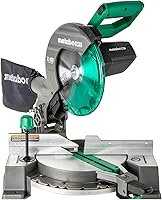
How to Cut Vinyl Siding With a Miter Saw
You can cut vinyl siding with a miter saw, but use a fine-tooth blade and let the blade reach full speed before it touches the panel. Cut from the back face where possible, support the long overhang, and use the miter angle for corner and gable joints.
On this page (8 sections)
- What blade and saw settings does vinyl siding need?
- How do you set up and support a long siding panel?
- How do you make a square cut on vinyl siding?
- How do you make angled cuts for corners and gables?
- How do you keep the cut edge clean and avoid cracking?
- How do you stay safe when cutting siding on a miter saw?
- How does a miter saw compare with snips or a circular saw for siding?
- Which miter saw should you buy for siding work?
You can cut vinyl siding with a miter saw, and it's often the cleanest way to get square ends and accurate corner angles. The saw does the work quickly, but vinyl is softer and more brittle than wood, so the blade and the feed speed matter more than they do on lumber.
This guide covers the blade choice, the setup, the square and angled cuts, and the safety points that keep panels from cracking. It finishes with the saws that fit a siding job.
What blade and saw settings does vinyl siding need?
Use a fine-tooth carbide blade, around 80 to 100 teeth on a 10-inch saw, and run the saw at full speed before the blade meets the panel. A coarse framing blade grabs the vinyl, leaves a torn edge and can pull a thin panel into the kerf.
Set the saw to 0° bevel for square cuts. Lock the miter detent so the table can't drift mid-cut.
If your saw has a laser or LED cut line, use it to line up the mark, but don't rely on it for the final edge.
Check the blade direction on a sliding saw. The teeth should enter the material from the bottom edge so the burr forms on the hidden face.
That's the same reason to cut face down whenever the panel allows it.
A multi-material blade is worth considering if you also cut aluminum trim or plastic fascia on the same saw. Test it on an offcut before trusting it on a visible panel.
How do you set up and support a long siding panel?
Support the full length of the panel on both sides of the blade, and keep the factory edge tight against the fence. A 12-foot panel that sags on one end will bind the blade and produce a ragged cut or a kickback.
Set the saw on a stable bench or stand at a comfortable height. A sawhorse pair works, but the saw itself needs to be clamped or bolted down so it doesn't walk when the blade starts.
Build a small support table at blade height on the outfeed side. A roller stand or a stack of scrap set to the same height keeps the panel flat through the cut.
Clamp the panel to the fence when you can. A long siding panel needs a second clamp or a helper holding the far end level.
How do you make a square cut on vinyl siding?
Mark the cut on the back face, align the mark with the blade, and feed slowly through the panel. A square end is the most common cut in siding work, used at every butt joint and at the ends of a run.
- Measure from the factory end to your mark and draw a square line on the back face.
- Set the miter table to 0° and lock it.
- Bring the blade down to the mark with the saw off, so you can check alignment.
- Start the saw, let it reach full speed, then lower the blade into the panel.
- Push steadily and let the teeth cut. Don't force it.
- Release the trigger and wait for the blade to stop before lifting the arm.
Cut slowly through the lock seam. The doubled thickness at the nailing hem is where a fast feed tears the vinyl.
If the blade chatters, the panel isn't flat against the fence.
How do you make angled cuts for corners and gables?
Set the miter angle on the table, mark the angle on the back face, and sneak up on the line with a test cut on scrap. Corner and gable cuts are where the miter saw earns its place over a circular saw or snips.
For inside and outside corners, measure the angle with a bevel gauge or a protractor, then halve it for the miter setting. A true 90° corner needs 45° on each piece.
Older homes are rarely square, so always measure the actual corner rather than assuming.
For gable ends, the angle is the roof pitch. Mark the pitch on the panel and set the miter to match.
A compound miter saw lets you combine a miter and bevel when the cut needs both, which is handy on raked trim.
Test the fit before cutting the final panel. Hold the cut piece against the corner and check the overlap.
Vinyl siding is designed to overlap, so a hair long is safer than a hair short.
Which saw handles siding and trim cuts best?
The Evolution R255SMS+ 10-Inch Multi-Material Sliding Miter Saw is the pick for a siding job that also touches metal trim. Its multi-material blade is rated for wood, plastic and mild steel, so you can cut vinyl, aluminum fascia and wood blocking on one saw without swapping blades.
The 0° to 45° bevel and 50° to 50° miter range cover corner and gable angles, and the dual quick-release clamps help hold long panels against the taller fences. The sliding action reaches across a full-width panel in one pass, which a non-sliding chop saw can't do.
When is a dual-bevel saw worth it?
The Evolution R255SMS-DB+ 10-Inch Dual-Bevel Sliding Miter Saw adds a 45° to 45° dual bevel, left and right. That matters when you cut both sides of a corner without flipping the panel.
On siding, flipping a long panel to bevel the other way is awkward and easy to get wrong.
It shares the multi-material blade and the 50° to 50° miter range with the R255SMS+, so the corner and gable work is the same. Pick it only if you'll be cutting angled trim on both faces.
What about a simpler compound saw?
The Genesis GMS1015LC 10-Inch Compound Miter Saw with Laser is a lighter, simpler option for square and miter cuts on siding. It bevels up to 45° left and miters 45° left and right with 9 positive stops at common angles.
The laser guide helps line up the mark quickly, and the 15-amp motor runs at 4,600 rpm.
It's a fixed-head saw, so it won't slide across the widest panels. Measure your siding width against the saw's cutting capacity before you buy.
How do you keep the cut edge clean and avoid cracking?
Cut face down, feed slowly through the lock seam, and warm cold panels before cutting. These three habits prevent most of the cracked and torn edges that give miter saws a bad name on vinyl.
Vinyl gets brittle in cold weather. Bring panels indoors or into a heated space for a day before cutting, and make a test cut on an offcut to check the blade is biting cleanly.
If the edge chips, the blade is dull or the feed is too fast.
Support the panel so it doesn't sag as the blade exits. A sagging panel pinches the blade and causes a ragged edge or a kickback.
Keep the offcut end supported too, so the panel doesn't drop and snap at the cut line. A quick pass with a deburring tool or fine sandpaper cleans the edge before installation.
How do you stay safe when cutting siding on a miter saw?
Clamp the panel, wear eye and ear protection, and keep your hands clear of the blade path. Vinyl chips fly, and long panels move more than short boards.
Keep the cord and any extension lead away from the cut line and off the floor where the panel could drag it. A sliding saw pulls the blade toward you, so stand to one side of the blade rather than directly behind it.
Never reach across the blade to hold the far end of a panel. Use a clamp or a helper.
Let the blade stop fully before lifting the arm or moving the panel. Keep the guard in place and the table clear of offcuts between cuts.
How does a miter saw compare with snips or a circular saw for siding?
A miter saw gives the cleanest square and angled cuts; snips are faster for short trim, and a circular saw handles long rip cuts. Each tool has a place on a siding job.
Snips are handy for notching around outlets and for small trim pieces, but they leave a slightly wavy edge on long panels. A circular saw with a fine blade is better for ripping a panel down its length.
A miter saw is the tool for crosscuts and angled ends.
If you're weighing saw types, our guide to what a miter saw is used for covers the crosscut and trim jobs where it shines. The difference between a basic miter saw vs compound miter saw matters here too, since corner and gable cuts need the compound or sliding model.
And if your job also includes metal trim, see whether a miter saw can cut aluminum before you buy a blade. Cutting wide boards is a separate question, covered in can a miter saw cut a 4x4.
Which miter saw should you buy for siding work?
Pick the R255SMS+ if you want one saw for vinyl, wood and metal trim, and the dual-bevel version if you cut angled trim on both faces. The Genesis is the budget choice for square and miter cuts on narrower panels.
For most siding jobs, the multi-material sliding saw is the better fit because it handles the panel width and the mixed materials in one pass. A fixed-head saw is fine if your siding runs are short and you already own a circular saw for the long rips.
Whichever you choose, fine teeth, full speed, slow feed, and a supported panel will do more for edge quality than any single feature on the saw.
Frequently asked questions
Can a miter saw cut vinyl siding without cracking it?
Yes, if the blade is sharp and fine-toothed and you feed the panel slowly. Vinyl gets brittle in cold weather, so keep panels at room temperature before cutting and avoid forcing the blade through a thick lock seam.
What blade should I use to cut vinyl siding on a miter saw?
Use a fine-tooth carbide blade, around 80 to 100 teeth in a 10-inch size, or a multi-material blade designed for plastic. A coarse framing blade tears the vinyl and leaves a ragged edge that shows at every overlap.
Do I need to cut vinyl siding face up or face down?
Cut face down when the saw's blade teeth enter from the bottom, so the good side stays against the fence and the burr forms on the hidden back face. Check your saw's blade direction first, since a sliding miter saw pulls the blade toward you.
Can I cut vinyl siding with a miter saw outside in winter?
Yes, but warm the panels first. Cold vinyl gets stiff and can chip or shatter, so bring siding indoors or into a heated space for a day before cutting, and make test cuts on an offcut to check the blade is biting cleanly.
How do I get a clean angled cut for gables and corners?
Set the miter table to the angle you measured and clamp the panel firmly against the fence. Mark the angle on the back face, sneak up on the line with a test cut on scrap, and lock the miter detent so the table doesn't drift.