How to Secure a Miter Saw
To secure a miter saw, bolt or clamp its base to a flat, stable surface such as a bench, stand or board, so the base can't slide or tip during a cut. Tighten everything, keep the surface clear and level, and check the base for flex before you start the saw.
On this page (8 sections)
- Why does a miter saw need to be secured before cutting?
- How do you choose the right surface to mount a miter saw?
- How do you bolt a miter saw to a workbench?
- How do you clamp a miter saw without drilling holes?
- Which miter saws are easier to secure to a bench or stand?
- How do you stop a miter saw from sliding on a smooth floor or bench?
- What mistakes make a secured miter saw come loose?
- How do you check a miter saw is secure before you cut?
To secure a miter saw, bolt or clamp its base to a flat, stable surface such as a workbench, saw stand or mounting board so the base can't slide or tip during a cut. Tighten the fasteners, clear the surface of chips and debris, and check that the base sits flat before you start the saw.
A miter saw pulls and pushes as the blade bites, so anything loose under the base turns into movement at the cut line. If you're still deciding on a saw, our guide to what a miter saw is used for covers the common jobs first.
Why does a miter saw need to be secured before cutting?
A miter saw needs to be secured because the spinning blade and the sliding head create force that can shift a loose base. When the base moves, the cut wanders and the blade binds.
On a compound cut, where the head is tilted and turned at the same time, the base carries more leverage. Movement is easier to start and harder to notice until the cut is already off.
Vibration is the other problem. A saw at full speed on a hard bench top can creep across a smooth surface between cuts.
Bolts or clamps stop that creep.
Securing the saw also protects the base and fence. A saw that rocks can bend a fence out of square, and then every cut after that is wrong.
A firm mount is the first step in how to adjust a miter saw so your angles stay true.
How do you choose the right surface to mount a miter saw?
Choose a surface that is flat, rigid and heavy enough to resist the saw's motion. A bench or stand that flexes or slides under load won't hold the saw square no matter how hard you tighten the clamps.
A dedicated miter saw stand is the usual choice for a shop or truck, because its top is designed for the base and its legs spread wide. A solid workbench works too, as long as the top is thick and well braced.
Avoid plastic folding tables and thin sawhorse tops.
Height matters as well. A bench around waist height lets you control the head comfortably.
If the saw sits too low or too high, you end up leaning on the base, which is another way to make it shift.
Check flatness with a straightedge before mounting. A dip or raised seam under the base means the saw rocks, and a rocking base is the most common reason a miter cut comes out crooked.
How do you bolt a miter saw to a workbench?
Bolt a miter saw through the mounting holes in its base, using bolts with washers and lock nuts so the saw can't loosen over time. Measure the hole spacing first, drill matching holes in the bench, and tighten evenly.
- Set the saw in its working position and mark the mounting holes with a pencil.
- Check that the marks clear the bench frame and any drawer underneath.
- Drill holes slightly wider than the bolt shaft.
- Drop in the bolts from above, add washers and lock nuts underneath, and tighten until the base is firm but not crushed.
- Recheck the base for flatness and rock before plugging in.
Washers spread the load and stop the bolt pulling through the base. Lock nuts keep vibration from working the bolts loose.
Bolting is the firmest option for a saw that stays in one place. If you move the saw between jobs, clamping is faster and leaves the bench top intact.
Neither method works if the base sits on chips or the bench top is uneven.
How do you clamp a miter saw without drilling holes?
Clamp a miter saw by gripping the base, not the rubber feet, with at least two clamps near opposite corners. Move them inboard enough that the jaws press on solid base metal and the saw can't pivot.
Bar clamps or C-clamps both work. A quick-release trigger clamp is handy if you take the saw on and off the bench often.
Set the clamp so the jaw sits flat on the base and the other end grabs the underside of the bench top or the stand's frame.
Don't clamp across the sliding rails or the head. That can bind the movement or put pressure where the saw wasn't built to take it.
Keep the clamps clear of the blade's path so nothing catches as you cut.
Check the clamps after the first few cuts. Vibration can loosen a trigger clamp slowly.
For a saw clamped to a stand, make sure the stand is locked open and its feet are planted.
Which miter saws are easier to secure to a bench or stand?
The easier saws to secure are the ones with a flat base and mounting holes you can reach, plus a weight and footprint that suit the surface you have. Our score weighs specs and features against the job of staying put.
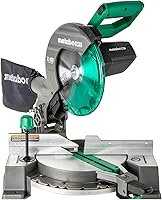
The Metabo HPT C10FCG2 for moving between job sites
The Metabo HPT C10FCG2 earns our Best for moving between job sites badge. At 24.2 lb it's the lightest of the three, so carrying it to a stand and clamping it down is quick work for one person.
Metabo HPT lists a 0-52 degree miter range both left and right and a 0-45 degree bevel range to the left. A wide miter range means more positions to check after clamping, so confirm the base hasn't shifted before the first cut.
Its vice clamping system also holds the workpiece, which takes some of the load off the base during a cut.
The DeWalt DWS713 for simpler benchtop clamping
The DeWalt DWS713 earns our Best for simpler benchtop clamping badge. It's a single-bevel compound saw at 31 lb, with a smaller footprint than the sliding saw here, so two clamps or four bolts are enough on most benches.
DeWalt lists a stainless-steel miter detent plate with 14 positive stops and a machined base fence support. That base fence is the part you want flat and square, so set the saw down clean and check it before tightening the clamps.
Its lighter weight also makes it easier to lift off a stand when the job is done.
The WEN MM1015 for wall-flush benchtops
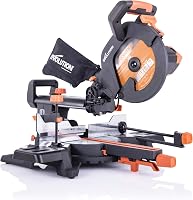
The WEN MM1015 earns our Best for wall-flush benchtops badge. Its dual-rail slide system lets it run compact against a wall, so a bench along a wall can hold it without leaving a wide aisle behind the head.
WEN lists a 48 lb weight, heavy enough to feel planted on a bench and still movable with its carrying handle. The base is long, so use bolts or four clamps rather than two when the bench top is smooth.
If the bench can't take holes, our guide to budget miter saw options can help you match a saw to the surface you already have.
How do you stop a miter saw from sliding on a smooth floor or bench?
Stop a miter saw from sliding by securing the saw to the stand or bench, then securing the stand or bench to the floor. A bolted saw on a stand that skates across concrete still moves as a unit.
Add rubber feet or an anti-slip mat under the stand's legs. If the stand has wheels, lock them and chock the frame so it can't roll.
On a bench, check that its own feet sit flat and that the frame doesn't rock.
Sawdust is a hidden cause of sliding. Chips under the base or the stand's feet act like tiny rollers.
Brush the surface clean before you set the saw down and again before each session.
If the saw still creeps, look at the mounting. A clamp that grips only a thin edge or a rubber pad will loosen.
Move it onto solid base metal and retighten.
What mistakes make a secured miter saw come loose?
The common mistakes are clamping a rubber foot, over-tightening until the base bends, and mounting on a surface that flexes. Each one feels tight at first and works loose once the saw is running.
- Gripping a rubber pad instead of the base lets the saw slide out from under the clamp.
- Over-tightening a thin base can bow it, so the saw rocks instead of sitting flat.
- Mounting to a hollow-core door or a thin table top crushes the surface and loosens the fasteners.
- Leaving chips under the base means the saw starts out unlevel.
- Bolting to a bench that isn't braced lets the whole bench rock with the saw.
Check the mount after the first cut and again at the end of a session. A quick look at the clamps and the base takes less time than recutting a board.
How do you check a miter saw is secure before you cut?
Check that the saw is secure by pushing the base from a few directions and watching for any lift or slide, then confirming the blade and head move freely. If the base moves, the mount isn't done.
Press down on each corner of the base in turn. Press sideways on the head with the saw off.
If anything shifts, find the loose clamp or bolt and fix it before starting the saw.
Confirm the surface is clean and flat, the fasteners are tight, and the stand or bench is locked and stable. Then set the miter angle and make a test cut in scrap.
A clean, square test cut is the best proof the whole setup is holding.
Working out how to secure a miter saw comes down to a flat base, firm fasteners and a stable surface. Bolt the saw down when it stays in one place, clamp it when it moves, and match the saw to the job: the Metabo HPT C10FCG2 for a saw that travels, the DeWalt DWS713 for simple benchtop clamping, and the WEN MM1015 for a tight wall-side bench.
If you're still weighing saw types, see miter saw vs compound miter saw to pick the right head for your cuts.
Frequently asked questions
Should I bolt or clamp a miter saw to a bench?
Clamp the base if you need to move the saw often and the bench top is solid. Bolt it through the mounting holes when the saw will stay in one spot, because bolts hold tighter against vibration and won't walk off a smooth bench top.
Do I need a special mounting plate?
Not always. Many saws have holes in the base for bolts, so you can fix them straight to a bench top.
A separate mounting board helps when you don't want holes in the bench or when the stand's top is too narrow for the base.
How many clamps should hold a miter saw?
Use at least two clamps, one near each end of the base, so the saw can't pivot. A long base with heavy sliding rails benefits from four clamps or bolts, since a single clamp in the middle lets the ends lift under a cut.
Can I secure a miter saw to a plastic folding table?
It's not a good choice. Plastic tables flex and slide under the vibration of a saw, and the top can crack at a mounting point.
Use a proper saw stand or a sturdy wooden bench instead, even for short jobs.
Why does my miter saw still move after I clamp it?
The clamps are probably gripping a surface that gives way, or the base is sitting on debris. Clear the bench top, set the base flat, and move the clamps inboard so the base itself is held rather than a thin edge or a rubber foot.