How to Open a Miter Saw
To open a miter saw, turn the miter lock knob or lever counterclockwise and lift or press the detent pin, then swing the head to the angle you want. Release the bevel lock the same way when you need to tilt the head for a compound cut.
On this page (10 sections)
- What controls lock a miter saw, and what does each one do?
- How to open a miter saw step by step
- How do you release the miter lock and detent pin?
- How do you open the bevel so the head tilts?
- Why won't the saw head move after you open it?
- When should you lock the saw again, and when leave it free?
- How do you keep the locks working and the angles true?
- Which saws have the easiest locks to reach?
- What safety habits go with opening a miter saw?
- How to open a miter saw and keep the angles honest
To open a miter saw, turn the miter lock knob or lever counterclockwise and lift or press the detent pin, then swing the head to the angle you want. Release the bevel lock the same way when you need to tilt the head for a compound cut.
The lock that matters most is the one holding the table. The second is the one holding the tilt.
Getting both free is what lets the saw move, and knowing how to lock them again is what keeps the cut accurate.
What controls lock a miter saw, and what does each one do?
Two locks hold the head in place: the miter lock on the table and the bevel lock on the tilt joint. Releasing both lets the saw swing and tilt; leaving either tight pins the head to one angle.
The miter lock is a knob or lever under the front of the table. Turning it counterclockwise frees the table so it can rotate left or right.
Many saws also have a detent pin or a press-and-hold button that clicks into the positive stops at 0, 15, 22.5, 31.6 and 45 degrees.
The bevel lock is a lever or knob behind the head. It holds the blade at 0 degrees for a straight vertical cut.
Loosen it and the head tilts to the bevel angle, then tighten it fully before you cut.
A few saws combine the two into one control. If your saw has a single lever on the head, it releases the miter table and the bevel together.
Check both movements before you assume the saw is free.
How to open a miter saw step by step
Start with the blade down and the saw unplugged, release the miter lock, move the head, then lock it at the angle you need. The order matters less than making sure both locks are loose before you force anything.
- Unplug the saw and lower the head to rest position.
- Find the miter lock knob or lever under the front of the table.
- Turn it counterclockwise until the table turns freely.
- Lift or press the detent pin so it clears the positive stops.
- Swing the head to your angle, then release the pin so it snaps in.
- Tighten the miter knob to hold the angle.
- For a bevel cut, loosen the bevel lever, tilt the head, and tighten it again.
If you plan to cut compound angles often, read our guide to what a miter saw is used for so the lock order matches the cut type. A straight cut needs the miter lock only.
How do you release the miter lock and detent pin?
Turn the lock counterclockwise and lift the detent pin with your thumb while you move the table. The pin rides on a notched plate and clicks into each stop, so the table stays put when you let go.
Some saws use a squeeze lever instead of a knob. Squeeze it toward the handle to free the table and release it to lock.
Others have a push-button override on top of the miter scale that lets you move past a detent without holding the pin.
If the table won't turn after you loosen the knob, the pin is still seated. Lift it fully, or press the override, and try again.
Forcing the table with the pin engaged wears the notches and throws off your angle settings.
How do you open the bevel so the head tilts?
Loosen the bevel lock lever or knob behind the head, tilt to your angle, then tighten it firmly. The bevel control sits at the back or side of the head, separate from the miter knob on the table.
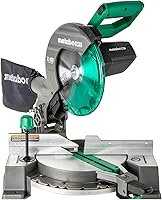
On the Metabo HPT C10FCG2, the bevel range runs 0 to 45 degrees to the left. The DeWalt DWS713 bevels 0 to 48 degrees to the left and 0 to 3 degrees to the right.
The Bosch CM10GD goes 47 degrees left and 47 degrees right, with detents at 0, 33.9 and 45.
If the head feels stiff when you tilt it, the bevel lock is probably still partly tight. Back it off another turn before you push.
Once the angle is set, snug the lever down so the head can't creep during the cut.
Why won't the saw head move after you open it?
A seated detent pin, a partly tight bevel lock or a packed positive stop is the usual cause. Check those three before you look for a bigger problem.
If the table moves but the head won't tilt, the bevel lock is the culprit. If the head tilts but the table won't turn, the detent pin is seated.
If neither moves, the miter knob may be cross-threaded or the bevel lever may be over-tightened from the last cut.
Sawdust packed into the miter notches can also stop the pin from seating or lifting cleanly. Brush the scale and the detent plate with a soft brush.
A dry lubricant on the pivot points helps, but don't spray oil near the blade guard or the motor.
When should you lock the saw again, and when leave it free?
Lock the miter table and the bevel before every cut, and leave them locked when you set the saw down. An unprotected head can swing or drop and catch the blade guard or your work.
Lock the miter knob once the pin snaps into the detent you want. Lock the bevel lever once the head is at the tilt angle.
Both should be snug enough that the head doesn't move when you press down.
The one time to leave a lock loose is when you're sliding the head to a new angle between cuts. Lock it again as soon as you reach the stop.
If you're comparing lock setups on different saws, our miter saw vs compound miter saw comparison shows how the controls differ.
How do you keep the locks working and the angles true?
Brush the scale and detent plate after every session and snug the locks without over-tightening them. Clean notches keep the pin seating cleanly, and firm but moderate pressure keeps the threads from wearing.
Wipe the miter scale and the positive stops with a soft brush or a dry cloth. Sawdust left in the notches makes the pin feel vague and the angle drift.
A light dry lubricant on the pivot points is fine, but keep it away from the blade.
Check the angle with a square or a digital gauge after you lock the table. If the 0 degree stop is off, the miter scale needs adjusting.
Our walkthrough of how to adjust a miter saw covers the fence, the stops and the bevel.
Which saws have the easiest locks to reach?
A saw with an up-front bevel lock and a clear miter knob is easier to open and relock between cuts. Reach matters more than the number of stops when you change angles often.
The Bosch CM10GD puts the bevel lock lever and range selector up front, so you don't reach behind the head. It also has a push-button miter detent override at the thumb for fine angle adjustment.
That layout suits trim work where you change bevels often.
The Metabo HPT C10FCG2 uses an improved miter scale and controls, with a 0 to 52 degree range left and right. That wide range covers most framing and trim angles without a second setup.
Its 24 lb body is light enough to move between benches.
The DeWalt DWS713 relies on a stainless-steel miter detent plate with 14 positive stops. The plate is durable and the stops repeat well, though the bevel lock sits in the more traditional spot behind the head.
If you're shopping on a tight budget, our roundup of budget miter saws covers what the entry-level locks and scales offer. Most budget saws still have a miter knob and a detent pin, just with fewer stops.
What safety habits go with opening a miter saw?
Unplug the saw before you reach around the head, and keep your hands clear of the blade when you release a lock. The head can drop when a bevel lock lets go, so support it as you loosen the lever.
Lower the head to rest before you open anything. Don't reach behind the blade to find a bevel lever; walk around or tilt the saw toward you.
Wear eye protection, and keep the blade guard in place.
Don't leave the saw unprotected with the blade raised. A bumped head can swing into the guard or your work.
Lock both controls when you finish a cut and set the saw down.
How to open a miter saw and keep the angles honest
To open a miter saw, loosen the miter knob and the bevel lever, move the head to your angle, then lock both again before cutting. Brush the detent plate when the pin feels vague, and check the stops with a square when an angle drifts.
If your saw's locks are hard to reach or the scale won't hold an angle, a saw with an up-front bevel lock and a clear miter override saves time. For most home workshops, the Metabo HPT C10FCG2 balances a wide 0 to 52 degree miter range with light 24 lb handling.
Pick the Bosch CM10GD when you change bevels constantly and want the controls at the front. Whichever saw you run, lock it before every cut and open it only when you're moving to the next angle.
Frequently asked questions
Why won't my miter saw turn after I loosen the lock?
The detent pin is still seated in one of the positive stops. Lift or press the pin while you turn the head, or the pin drags across the notches and the table feels stuck.
Is it safe to leave a miter saw unprotected?
No. Lock the miter table and bevel before you set the work down or walk away, so the head can't swing or drop unexpectedly.
What does the bevel lock look like on a compound miter saw?
It's a lever or knob behind or beside the head that holds the tilt angle. Loosen it to change the bevel, tighten it fully before cutting.
Do I have to open the saw to make a straight 0 degree cut?
No. The 0 degree detent is a locked position, so set the table there and tighten the knob, then cut as normal.