What Are Miter Saws Intended to Cut?
Miter saws are intended to cut wood and wood products at set angles, from baseboard and crown molding to framing lumber, decking and shelving. With the right blade, a multi-material saw also handles plastic and soft metals like aluminum.
On this page (8 sections)
- What materials are miter saws intended to cut?
- Which wood jobs get the most from a miter saw?
- Can a miter saw cut a 4x4 post?
- Do miter saws cut metal, plastic and pipe?
- How do miter angles change what the saw can cut?
- How does blade choice change what you can cut?
- What should never go under a miter saw blade?
- Which miter saws match the materials you cut?
What are miter saws intended to cut? Miter saws are built for wood and wood products, cut at the angle you set on the table or head.
That covers baseboard, crown, casing, stair treads, deck boards, shelving and framing lumber. A multi-material saw widens that list to plastic and soft metals.
The angled cut is the whole reason the tool exists. Corners, rafters and frames meet at angles, and a miter saw matches them in one pass instead of marking, sawing and sanding by hand.
What materials are miter saws intended to cut?
The short answer is solid wood and the boards made from it: pine, oak, poplar, plywood, MDF, particleboard and composite decking. These are the materials the fence, table and hold-down are designed around.
Miter saws cut flat, supported stock that sits still against the back fence. Trim, casing, baseboard, crown, handrail, fascia and 2x lumber all fit that description, which is why finish carpenters and deck builders reach for one first.
The saw shines when a board needs a clean end or a joint at 22.5°, 30° or 45°.
Softwoods cut fast and leave a clean face with a sharp carbide blade. Hardwoods and dense composites need a slower feed and a fine-tooth blade so the cut stays smooth.
For trim work, cutting slowly matters more than blade brand.
What a miter saw is not built for: round stock, irregular branches, sheet goods wider than its capacity and thick steel. Those need another tool.
Which wood jobs get the most from a miter saw?
Any joint that meets at an angle is a miter saw job. Baseboard corners, crown returns, picture frames, door casing, rafter tails, stair stringers and deck picture frames all depend on the angled cut.
That is the answer to what is a miter saw used for in one line.
Straight crosscuts matter too. A stop block and a miter saw turn out identical shelf ends, stud lengths and baluster cuts all afternoon.
The table stays set to 0° and the board butts against the fence.
For baseboard inside and outside corners, the saw does the mitering while the wall angle does the fitting. Our walkthrough on how to cut baseboard corners shows how to match the cut to the actual corner instead of assuming a perfect 90°.
Decking and fencing are rougher work. A 10-inch sliding saw can take a 2x6 in one pass, while wider deck boards may need the head to travel through the stock.
Can a miter saw cut a 4x4 post?
Yes, in most cases, though the saw size matters. A 10-inch sliding saw or a 12-inch non-slider can crosscut a 4x4 in one pass; a compact 10-inch non-slider often cannot.
The full breakdown is in can a miter saw cut a 4x4.
For a fence post or a deck railing, the usual move is to lay the 4x4 flat and make one cut if the height clears the blade. If it doesn't, roll the post a quarter turn after each cut and finish the square.
A 4x4 post is dense stock, so let the blade slow down through the middle rather than pushing. Support the offcut with a clamp so the far end doesn't drop and pinch the blade as it exits.
Which saw suits deeper stock?
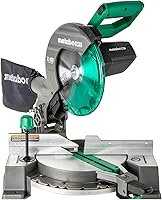
The Evolution R255SMS+ is a 10-inch sliding saw with a 50° to 50° miter range and a 0° to 45° bevel. The sliding head extends its reach through wider boards, and the taller fences help hold a post square as you cut.
The Makita LS1040 is a 10-inch non-sliding compound saw with a 15 amp motor and nine positive miter stops. It suits trim and crosscut work on flat boards; a 4x4 needs a check against its cut height before you commit.
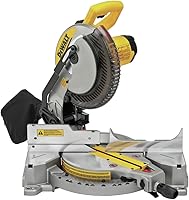
For either saw, a good carbide blade does most of the work. Both are 10-inch saws, so they take a 10-inch blade; the DeWalt 80-tooth blade is a 12-inch fine-finish option and only fits 12-inch saws.
Do miter saws cut metal, plastic and pipe?
Only with the right blade and a saw rated for it. A standard wood blade should stay out of metal; the teeth and motor aren't made for it.
A multi-material saw changes that.
The Evolution R255SMS+ is built to cut through wood, wood with embedded nails, composite decking, mild steel and plastic with one included 60-tooth TCT blade. Evolution says those mild steel cuts run virtually spark free and cool to the touch.
Aluminum trim, channel and thin sheet are soft enough for a carbide blade on a capable saw. Our guide on whether a miter saw can cut aluminum covers blade choice and feed rate.
Thick pipe and hardened steel are a different matter and want a dedicated metal saw.
PVC trim and plastic channel cut cleanly with a fine-tooth blade and a slow drop. Push too fast and the plastic can melt and smear the cut face.
How do miter angles change what the saw can cut?
The angle limit is about the table, not just the blade. A typical 10-inch saw swings 45° or 50° both ways; the Makita LS1040 goes 45° left and 52° right, with positive stops at 15°, 22.5°, 30° and 45°.
The bevel adds the second axis. A 45° bevel plus a 45° miter is the classic crown molding setup, which is why compound saws exist.
A bevel of 0° to 45° handles baseboard, casing and most picture frames.
Set the saw to a positive stop when you can rather than eyeballing the scale. The detents are machined for repeatable 90°, 45° and 22.5° cuts, so two boards meet cleanly.
Save the free angles for odd wall conditions.
Tall crown can hit the blade guard when laid flat. Cut it nested against the fence and check the clearance on scrap before making the real cut.
How does blade choice change what you can cut?
Tooth count sets the finish; blade material sets the material list. A 60-tooth blade is a good all-rounder, an 80-tooth blade leaves a smoother edge in trim, and a low-tooth ripping blade feeds faster in framing lumber.
Material matters just as much. A general-purpose wood blade slices softwood, hardwood and plywood cleanly.
A multi-material TCT blade is the one to trust for mild steel, aluminum and plastic.
Blade size has to match the saw. A 10-inch saw takes a 10-inch blade, while the DeWalt DWA11280 is a 12-inch fine-finish blade for 12-inch saws and softwood, hardwood, chipboard and plywood.
Change blades when the face tears or the cut smears. A dull blade loads the motor and leaves a rough edge, which shows up fastest on painted trim.
What should never go under a miter saw blade?
Nothing round, loose, wet or unsupported. A branch rolls, a loose offcut lifts, a wet board shifts and a thin panel buckles into the throat plate.
All four turn a routine cut into a kickback.
Keep hands out of the blade path and clamp small pieces rather than holding them by hand. Let the head come to a full stop before you raise it, because a spinning blade grabs upward on exit.
For metal, keep the stock tight to the fence and feed slowly.
Metal shavings and sawdust in the same shop need care. Sweep between materials so a hot metal chip doesn't land in dry dust.
Which miter saws match the materials you cut?
For mixed jobs that include trim, decking and occasional mild steel, the Evolution R255SMS+ is the one to buy, because it cuts wood, plastic and mild steel on the included blade. For clean trim and framing crosscuts in wood, the Makita LS1040 is the better fit, and a 10-inch fine-tooth blade keeps those edges smooth.
To decide what your saw is intended to cut, match the blade to the material every time. A wood blade should stay wood, a multi-material blade earns its place in a mixed shop, and metal pipe still belongs on a dedicated metal saw.
Once the blade matches, the work comes down to layout. Explore the rest of our basics and matchups guides to match a saw to the joints you plan to cut.
Frequently asked questions
Can a miter saw cut through a tree branch or log?
Not safely or well. A miter saw is built for straight, supported boards that sit flat against the fence and table, so round, uneven branches can roll or pinch the blade.
Use a chainsaw or bow saw for limbs and firewood.
Is a miter saw the same as a chop saw?
They overlap but differ. A chop saw usually refers to an abrasive saw for metal, while a miter saw has a rotating table for angled cuts in wood.
A multi-material miter saw like the Evolution blends both jobs with one carbide blade.
What blade do I need to cut plastic trim on a miter saw?
Use a fine-tooth carbide blade made for plastic or a multi-material blade, and cut slowly so the plastic doesn't melt or chip. Support the trim on both sides of the blade and let the teeth do the work rather than forcing the head down.
Why do miter saws cut at angles instead of straight?
The angled cut is the point of the tool. Furniture, trim, frames and rafters meet at corners and slopes, so a rotating table and tilting head let you match those joints in one pass instead of marking and sanding by hand.