Are Miter Saw Stands Universal?
No, most miter saw stands are not universal. A stand fits a saw only when its mounting slots line up with the saw's base holes and the stand's weight limit covers the saw. Stands sold as universal use slotted brackets that accept many base patterns, but they still need a match on both counts.
On this page (7 sections)
- What does "universal" mean on a miter saw stand?
- Which parts of a stand decide whether your saw fits?
- How do you check your saw against a stand before buying?
- Which saws fit a universal stand most easily?
- When is a non-universal stand the better buy?
- Can a universal stand still wobble after mounting?
- Which stand should you buy for your saw?
No, most miter saw stands are not universal. A stand fits your saw only when its mounting slots line up with the holes in the saw's base and its weight limit covers the saw.
Stands sold as universal use slotted brackets that accept many base patterns, but they still need a match on both counts.
That's the short answer to whether miter saw stands are universal. The longer one is that "universal" describes a range, not a guarantee, so the job is checking your saw against that range before you buy.
What does "universal" mean on a miter saw stand?
A universal stand is built to accept a range of saw bases, not every saw ever made. The brackets slide along a rail or mount on a plate with long slots, so the bolts can move to meet different hole patterns.
That design covers many common 10-inch and 12-inch saws. It rarely covers every base shape, because makers space their mounting holes and feet differently.
A stand's own instructions list the slot travel and the base sizes it expects.
The word "universal" also shows up on stands with no slots at all, just a flat top and clamps. Those hold a saw by its base edges instead of bolting it down.
They fit more saws, but the saw can shift unless the clamps are tight. A flat-top stand also asks you to set the saw square every time you remount it, since there's no fixed hole pattern to return to.
Which parts of a stand decide whether your saw fits?
Three things decide fit: the mounting slots, the base footprint and the weight rating. Miss any one and the stand either won't bolt up or won't stay steady.
Start with the slots. Measure the distance between the holes in your saw's base and compare it with the stand's slot length and spacing.
If the holes fall outside the slot travel, the stand won't mount that saw. A saw with a single centered hole or a narrow pair of holes needs a stand whose brackets can close in that far.
Next, check the base footprint against the stand's top plate. A base that overhangs the plate can hang off the edge or sit on the rail brackets instead of the surface.
That overhang also changes the fence line, so square cuts can drift.
Finally, check the weight rating. A stand rated below the saw's weight will flex and rock.
The rated limit should sit at or above the saw's actual weight, with some margin for the stock you cut. Long boards pressed against the fence add load the stand has to carry, so margin matters more than the bare saw weight suggests.
How do you check your saw against a stand before buying?
Measure your saw, then match those numbers to the stand's published specs. It takes a few minutes and saves a return.
- Measure the base plate length and width.
- Measure the center-to-center distance of the mounting holes.
- Weigh the saw, or use the maker's stated weight.
- Compare all three with the stand's slot travel, top plate size and weight limit.
If the stand's slots are longer than your hole spacing and the plate is larger than your base, the fit is likely. A stand that lists a base size range rather than exact slots is the easiest to check.
When a seller shows only a weight limit, ask for the slot dimensions before you commit.
If you're still deciding between saw types, our guide to what is a miter saw used for covers the jobs each one handles. That helps you judge how much stand you actually need.
Which saws fit a universal stand most easily?
Fixed-base 10-inch and 12-inch saws fit most easily, because their bases are large and flat. Compact saws and sliding saws are the ones that most often fall outside a universal stand's range.
Here's how the three saws we compared land on a typical slotted stand. Our score weighs specs, features and buyer feedback against what you're shopping for.
Best for compact benches: Skil SRS0001
The Skil is the saw most likely to need a compact or short-slot stand. It's a 7-1/4-inch single-bevel saw with a fixed compact rail system, and Skil says the tool weighs under 25 lbs.
That light weight opens up almost any stand's limit, but its small base means full-size stand slots may fall outside the holes. Its compact rail system also keeps the saw's benchtop-to-wall footprint small, which pairs well with a stand that lets you work flush against a wall.
Pick it if your bench or truck bed is short on space. The trade-off is fewer inches of base for a stand to grab, so check the slot spacing first.
For the money side, see our roundup of budget miter saw picks.
Best for cordless job sites: DeWalt DCS714B
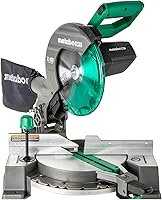
The DeWalt fixed-base saw is a steady candidate for a universal stand. DeWalt says it weighs 34 lbs as a bare tool, and its base is large enough for most slotted plates.
DeWalt lists a 6-inch horizontal cut capacity and a 5-1/4-inch baseboard cut standing upright. The saw also carries a cutline blade positioning system that DeWalt describes as adjustment-free, so the cut line stays where it should once the saw is seated.
Pick it if you move between sites and want one stand for a corded and a cordless saw. It's fixed-base, so there's no slide to clear behind the stand.
Battery and charger are sold separately, so factor the cordless kit into what the stand has to carry. How it lines up against a corded saw is covered in miter saw vs compound miter saw.
Best for heavy sliding cuts: Vevor 10-Inch
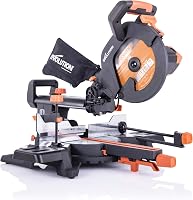
The Vevor sliding saw is the hardest of the three to seat on a universal stand. It's a 15-amp double-bevel sliding saw that Vevor lists at 39.7 lbs, the heaviest here.
Its axial slide also runs forward and back, so the stand needs weight headroom and clear space at the back.
Pick it if you cut wide stock and accept a sturdier stand. Its 60-tooth blade and 5,000 RPM motor suit laminate and composite decking as well as wood.
A stand rated below this saw's weight can rock during a slide. Our walkthrough on how to adjust a miter saw helps you square the fence once it's mounted.
When is a non-universal stand the better buy?
A saw-specific stand is the better buy when you keep one saw and want a firm, repeatable mount. It's drilled for that saw's base, so the saw seats without slot guesswork.
These stands usually carry the maker's name and match its own saws. The fit is tighter, the base sits flat, and the mounting bolts land in the right holes.
The catch is that the stand rarely takes a different brand's saw later. If you swap brands down the road, the dedicated stand becomes a spare.
If you plan to upgrade from a 7-1/4-inch saw to a 12-inch sliding model, a universal stand gives you more room to grow. If the saw is staying put, the dedicated stand wins on stability.
That's especially true for saws whose makers offer their own stand as a separate item, like the Skil rail stand sold apart from the saw.
Can a universal stand still wobble after mounting?
Yes, if the slots sit at the edge of their travel or the weight limit is tight. A stand can bolt up correctly and still flex when you push a long board through the cut.
The wobble usually comes from three places: bolts not snugged evenly, legs on uneven ground, or rails rated close to the saw's weight. Even tightening and leveling the feet fix most of it.
On a sliding saw, a stand rated just at the saw's weight leaves little margin. The heavier Vevor at 39.7 lbs shows why a little headroom helps.
Check the mounting bolts after the first few cuts and again when you move the stand. Vibration loosens bolts on any stand over time, universal or not.
A quick check with a wrench after each move takes seconds and keeps the base square.
Which stand should you buy for your saw?
Start with your saw's base size and weight, then pick a stand whose slots and limit both clear them. That single check answers whether miter saw stands are universal for your setup, whatever the label on the box.
For a compact saw, choose a stand with short slot spacing and a low weight limit. For a fixed 10-inch saw, most slotted universal stands fit.
For a sliding saw over 35 lbs, buy more stand than you think you need. Compare the saw's base holes and weight against the stand's slot travel and rated limit, and you'll know before you buy.
Don't buy on the "universal" label alone. Measure the base holes, the footprint and the weight, then compare.
That's the difference between a stand that fits and one that rocks.
Frequently asked questions
Can I use one stand for two different miter saws?
Sometimes. A slotted universal stand may fit both saws if their base holes land within its slot range and each saw stays under the stand's weight limit.
Check both bases against the stand's slot diagram, and expect to remount and realign the fence each time you swap saws.
How do I measure my miter saw for a stand?
Measure the base plate length and width, the distance between the mounting holes, and the saw's total weight. Take those numbers to the stand's spec sheet and compare them with its slot length, rail spacing and weight limit before buying.
Do compact miter saws need a special stand?
Compact saws like 7-1/4 inch models often sit on smaller bases, so a full-size stand's slots may fall outside the base. Look for a stand with short slot spacing or a compact stand built for smaller saws, and check the weight limit against the saw's actual weight.
Can I mount a sliding miter saw on a universal stand?
Yes, if the stand's weight limit covers the saw and the base holes fit its slots. Sliding saws are heavier and push their rails out behind the base, so pick a stand rated well above the saw's weight and leave clearance for the slide.
What happens if a stand is rated below my saw's weight?
The rails or legs can flex, the stand can rock during a cut, and the mounting bolts can loosen over time. A stand rated at or above the saw's weight keeps the base steady, which matters most on sliding saws and when cutting long stock.