Is a 10-Inch Compound Miter Saw Big Enough?
A 10-inch compound miter saw can handle many trim, framing, and DIY cuts when its published capacity covers your stock. Choose a model by the cuts you make, available workspace, and whether you need sliding reach.
On this page (10 sections)
- What can a 10-inch compound miter saw cut?
- When is a 10-inch saw too small?
- Does a sliding 10-inch saw cut wider boards?
- Should you choose a 10-inch or 12-inch saw?
- Which compound miter saw 10 inch features matter?
- How do you choose a 10-inch saw for your work?
- How should you set up and care for a 10-inch saw?
- What common buying and cutting mistakes should you avoid?
- Is a 10-inch compound miter saw right for your projects?
- Frequently asked questions
A 10-inch compound miter saw can be big enough for many trim jobs, framing cuts, and small projects. For a compound miter saw 10 inch buyers should compare the model’s cut capacity with the width, thickness, and angles they use most.
Blade diameter is only part of the decision. The saw’s fence, bevel direction, sliding travel, and work area determine whether it handles a particular cut.
What can a 10-inch compound miter saw cut?
A 10-inch compound miter saw can make crosscuts, miter cuts, and bevel cuts when the workpiece fits its capacity. It may suit molding, trim, dimensional lumber, and other wood projects, but the usable size varies by model and angle.
A compound saw tilts its blade for bevel cuts and turns the workpiece for miter cuts. Our guide to miter cuts and bevel cuts explains how those movements differ.
Check the manual’s capacity chart at 90 degrees and at the angles you expect to use. A board that fits a straight crosscut may not fit after you set a miter or bevel.
Is a 10-inch compound miter saw big enough for a 4x4?
It depends on the saw’s stated capacity and cut angle. A 10-inch blade does not guarantee that every model can cut a 4x4 in one pass.
Check the manual before cutting. Our guide to whether a miter saw can cut a 4x4 covers capacity and safe options.
When is a 10-inch saw too small?
A 10-inch saw may be too small when the stock exceeds its capacity or you need to crosscut wide boards in one pass. Measure your materials and compare those measurements with the model’s chart for the cut you need.
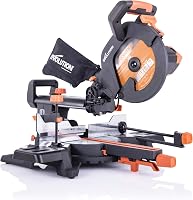
A sliding saw can increase crosscut reach by moving the blade across a wider board. That can help with wide shelves or trim, but its rails need room behind or around the saw.
Learn what a sliding compound miter saw is before deciding whether the added reach fits your shop. If you cut wide or thick stock often, compare sliding models and larger saws using their capacity charts.
Does a sliding 10-inch saw cut wider boards?
A sliding design usually allows a wider crosscut than a non-sliding saw with the same blade size. Exact capacity still depends on the model and cut angle.
The blade travels across the board, extending the saw’s reach. That makes a slider useful for wider stock, but the moving head and rails need clearance.
Compare published capacity at 90 degrees and at the miter angles you use. Our guide to sliding miter saws explains how reach, workspace, and portability affect the choice.
Should you choose a 10-inch or 12-inch saw?
Choose a 10-inch saw when its capacity covers your regular cuts and its footprint suits your workspace. Consider a 12-inch model if its stated capacity better matches the wider or thicker stock you cut often.
Blade size alone does not determine whether a saw fits your work. Compare each model’s cut chart, weight, and workspace needs with the materials you handle.
For mostly trim and ordinary project lumber, a 10-inch model may be enough. If wide boards are routine, compare sliding models and larger saws before choosing a non-sliding 10-inch saw.
Which compound miter saw 10 inch features matter?
Start with the capacity and cut directions your projects require. Then compare portability, angle controls, workpiece support, and any alignment aid you find useful.
A single-bevel saw tilts in one direction. For a cut requiring the opposite bevel, you may need to turn the workpiece; a dual-bevel saw can reduce repositioning on repeated angled cuts.
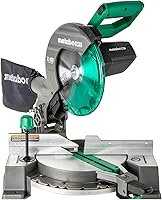
The Metabo HPT C10FCG2 suits buyers who want a portable corded saw with a wide miter range. Its left bevel reaches 45 degrees, its miter range spans 0–52 degrees in both directions, and it weighs 24.2 lb.
The DeWalt DWS713 suits buyers who want published crosscut capacities and a tall sliding fence. It cuts 2 x 6 in lumber at 90 degrees and 2 x 4 in lumber at 45 degrees; skip it if your routine cuts exceed those capacities.
The Genesis GMS1015LC suits occasional project work where a laser guide and nine positive miter stops are useful. Its maximum capacity for a 45-degree miter and 45-degree bevel is 1-3/8 x 3-5/16 in, so choose another model if your compound cuts need more room.
The Makita LS1040 suits buyers who want nine positive miter stops and a left bevel up to 45 degrees. Its miter range is 0–45 degrees left and 0–52 degrees right; skip it if you need a bevel in both directions.
How do you choose a 10-inch saw for your work?
Choose by measuring your most common stock and identifying the cuts you repeat. Match those needs to the manual’s capacities before comparing convenience features.
Use this checklist:
- Measure the widest and thickest pieces you expect to cut.
- Check the manual’s capacity at 90 degrees and at the angles you use.
- Confirm whether the stated cut requires sliding travel.
- Measure your bench and the clearance needed for the saw head and rails.
- Decide whether a single bevel works for your projects or a dual bevel would save repositioning.
- Consider whether you need portability or plan to leave the saw set up in one place.
For tall trim, check vertical capacity and fence support. For wide boards, compare crosscut reach and rail clearance.
A laser can help indicate the cut line, but it does not replace measuring and confirming alignment.
How should you set up and care for a 10-inch saw?
Set the saw on a stable, level surface and support long stock at the same height as its table. Secure the workpiece with the clamp when available, and keep the blade path clear before switching on the saw.
Before a cut, check that the workpiece sits firmly against the fence and table. Set the miter and bevel angles, then make sure the stock and your hands will stay clear of the blade path.
Keep the saw clean and follow its manual for blade changes, adjustments, and maintenance. Use a blade suited to the material and cut quality you need, and replace or maintain it according to the manufacturer’s guidance.
What common buying and cutting mistakes should you avoid?
The biggest mistake is treating blade diameter as a capacity rating. A 10-inch blade does not tell you the maximum width or thickness for every model, angle, or cut.
Other avoidable mistakes include:
- Buying before measuring your stock and shop clearance.
- Assuming a single-bevel saw tilts in both directions.
- Setting an angle without checking that the workpiece still fits.
- Choosing a sliding saw without room for its rails.
- Cutting a board that is unsupported or not held against the fence.
- Assuming a laser or detent setting removes the need to check alignment.
For a more detailed shopping checklist, see what to look for in a miter saw. If your projects mostly need straight cuts, compare a miter saw with a circular saw before buying.
Is a 10-inch compound miter saw right for your projects?
Pick a 10-inch compound miter saw if its capacity covers your usual materials and cuts. Choose a sliding or larger model when your regular stock exceeds that capacity, and pick bevel directions and portability to suit your work.
Measure first, compare the manual’s capacity chart, and browse compound miter saws to compare options for your projects.
Frequently asked questions
Can a 10-inch miter saw cut a 2x6?
Some 10-inch saws can cut a 2x6 at 90 degrees, but capacity differs by model. Check the manual’s crosscut chart for the board size and angle you need; blade diameter alone does not confirm the cut.
Is a 10-inch miter saw good for trim work?
A 10-inch saw can suit many trim jobs if its capacity covers the molding’s height and width. Measure the trim and check the manual, especially for tall baseboards, crown molding, or angled cuts.
Do 10-inch miter saws use a 10-inch blade?
Yes, a 10-inch miter saw is designed for a 10-inch blade. Use a blade that matches the saw’s requirements and follow its manual for blade changes and safe operation.
Frequently asked questions
Is a 10-inch miter saw enough for baseboards?
Often, yes, if the baseboard fits within the saw's capacity. Measure its height and thickness, then check the manual for capacity at your cut angle.
Tall baseboards may need to be laid flat or cut with a saw that has more vertical capacity.
Can a 10-inch miter saw cut a 4x4?
Some 10-inch saws can cut a 4x4 in one pass, but capacity varies by model and angle. Check the manual for the exact crosscut capacity before cutting.
See our guide to cutting a 4x4 with a miter saw.
Is a 10-inch or 12-inch miter saw better?
A 10-inch saw can suit trim, framing, and general DIY work when its capacity fits your boards. A 12-inch model may offer more capacity, but compare each saw's published limits with your material, cut angles, and workspace before choosing.
Should I buy a sliding 10-inch miter saw?
A sliding 10-inch saw can cut wider boards than a comparable non-sliding model, but its rails need extra clearance. Compare the published capacity and space needed with your boards and shop before deciding whether the added reach is useful.