Miter Saw vs Circular Saw: Which Do You Need? (October 2026)
Choose a miter saw for repeatable crosscuts and angles; choose a circular saw for long cuts and work that cannot come to a bench. Your material, cut length and workspace decide which tool fits.
On this page (8 sections)
- Miter Saw vs Circular Saw: Which Do You Need? (October 2026)
- Miter saw vs circular saw: what is the main difference?
- Which saw is better for trim and crosscuts?
- When is a circular saw the better choice?
- Which saw makes angled cuts more easily?
- Which saw should you buy for DIY projects?
- What should you consider before making a cut?
- Which should you choose: a miter saw or circular saw?
Miter Saw vs Circular Saw: Which Do You Need? (October 2026)
Choose a miter saw for repeatable crosscuts and angles; choose a circular saw for long cuts and work that cannot come to a bench. In the miter saw vs circular saw choice, the shape and size of your work matter as much as the cut.
A miter saw holds the material against a fence while its blade comes down through it. A circular saw moves by hand across or along the material, so it can handle longer cuts and larger pieces.
Miter saw vs circular saw: what is the main difference?
A miter saw brings the blade to the work for controlled crosscuts; a circular saw travels through the work for flexible cuts. That difference sets up the rest of the decision.
Use a miter saw when you need to cut board ends to length or make the same angle across several pieces. Its fence and angle settings help you repeat the setup.
Use a circular saw when the material is long, wide or fixed in place. It can travel across a sheet or along a board, provided you mark the cut and support the material well.
The tools can overlap on some cuts, but they don't feel interchangeable. A miter saw needs space for the saw and the stock to rest on its table, while a circular saw needs a stable surface and room to guide the cut.
Which saw is better for trim and crosscuts?
A miter saw is usually the better choice for repeated crosscuts, trim work and angled board ends. It is built to bring the blade down at a chosen angle while the material stays against a fence.
That setup is useful for baseboards, casing, small framing pieces and other stock that fits the saw's cutting capacity. A guide to what a miter saw is used for can help you match the tool to common home projects.
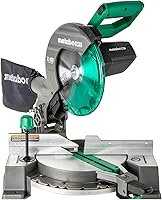
The 10-inch Metabo HPT C10FCG2 has a miter range of 0–52° left and right and a bevel range of 0–45° to the left. Its vice clamp helps hold a workpiece in place while you make a cut.
A miter saw is less useful for cuts that run lengthwise down a board. The stock has to fit on the saw table, and moving long material through a small workspace can be awkward.
When is a circular saw the better choice?
A circular saw is the better fit for long cuts, sheet goods and work that stays too large or awkward to bring to a miter saw. You move the saw across the material instead of moving the material through a fixed cutting area.
For example, a circular saw can cut a plywood sheet down to a smaller size or trim a board along its length. Clamp a straightedge as a guide when the cut needs to stay straight, and support both sides so the offcut does not pinch the blade.
The DeWalt DWE575 is a corded 7-1/4-inch circular saw. It has a stated 2-9/16-inch depth of cut and 53° bevel capacity, which can help with angled cuts when the saw is guided carefully.
A handheld saw takes practice to guide accurately. Mark the cut, check the blade path, and keep your hands out of the cutting line.
Which saw makes angled cuts more easily?
A miter saw makes repeatable angled crosscuts more easily; a circular saw can make bevel cuts with a careful guide. The distinction is between adjusting a saw for a crosscut and steering a handheld tool through the work.
A miter setting turns the saw left or right across the board. A bevel setting tilts the blade.
If you are new to those terms, our guide to miter cuts and bevel cuts explains what each one does.
The DeWalt DWS713 has 14 positive miter stops and a tall sliding fence. Its bevel range is 0–48° to the left and 0–3° to the right, so check the angle direction you need before choosing it.
A circular saw's bevel setting is useful for a long angled cut, but keeping the saw on a line still depends on your setup and control. For multiple identical short cuts, the miter saw's fence and stops are often simpler.
Which saw should you buy for DIY projects?
Buy the saw that matches the cut you expect to make most often. A miter saw is a focused tool for crosscuts, while a circular saw covers more kinds of work when you can set up a stable cutting surface.
Choose a miter saw if your projects involve flooring, trim, deck boards or repeated framing cuts. Compare saw sizes and features in our compound miter saw guide, especially if angled cuts are part of the plan.
Choose a circular saw if you need to break down plywood, cut long boards or work on pieces that are already installed. It also takes less fixed bench space, though safe support and a clear path for the saw remain essential.
If you are unsure whether the tool will earn its space, start with whether you need a miter saw for DIY projects. Occasional work may not justify owning both tools.
What should you consider before making a cut?
Support the material, secure it where appropriate and follow the saw's manual for safe setup. The right tool cannot make an unstable workpiece safe.
For a miter saw, use the fence and clamp where suitable, and support long stock on both sides of the cut. Keep the stock flat on the table, and make sure it cannot shift as the blade comes down.
For a circular saw, support the material so the blade won't hit the work surface or bind in the cut. Set the depth and bevel according to the manual, secure the workpiece, and wait for the blade to stop before setting the saw down.
Wear eye and hearing protection, keep the cord clear of the blade, and avoid loose clothing near moving parts. Unplug a corded saw before changing its blade or making adjustments that the manual says require it.
Which should you choose: a miter saw or circular saw?
Pick a miter saw for accurate, repeatable crosscuts; pick a circular saw for long cuts and large material. If your projects regularly include both, owning both tools can save setup time.
For trim and repeated board ends, start with the miter saw. For plywood, long rips and flexible jobsite cuts, choose the circular saw.
If you only buy one, use your next few projects to decide which type of cut comes up most often. Then compare the miter saw options or review what a miter saw can do before settling on a model.
Frequently asked questions
Is a miter saw or circular saw better for beginners?
A miter saw can be easier for repeated square or angled crosscuts because the workpiece rests against a fence and the saw follows a set path. A circular saw is more flexible, but you need to guide it along a marked line and support the material.
Choose based on the cuts you need to make.
Can a circular saw make accurate miter cuts?
Yes, a circular saw can make angled cuts when its base is set to the needed bevel and the cut is guided with a straightedge. The setup takes care, especially across a wide board.
For many matching short pieces, a miter saw is usually easier to set and repeat.
Can a miter saw cut long boards?
A miter saw is made for crosscuts across a board, not long cuts along its length. Its fence supports the work while the blade travels down through it.
A circular saw is the better fit for ripping boards or cutting large sheets that cannot be placed on a miter saw.
Do I need both a miter saw and a circular saw?
You may benefit from both if your projects include repeatable trim crosscuts and long cuts through boards or sheet goods. If you only make occasional home repairs, start with the saw that fits your most common cut, then rent or borrow the other when a project calls for it.